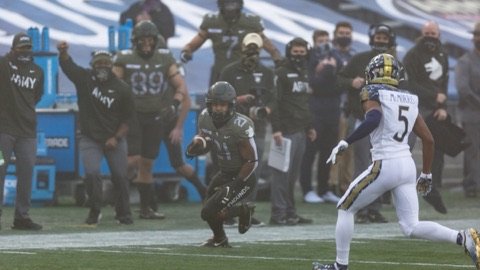

On the fourth Thursday in November, most of the United States stops working, eats an enormous meal and turns on a football game. The habit is older than the National Football League, older than the forward pass, and almost as old as the sport itself.
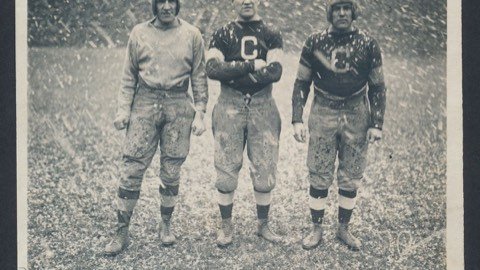
Thanksgiving was a patchwork of local observances before it became a fixed national holiday in the nineteenth century. Football arrived almost immediately afterwards. By the 1870s and 1880s, with the college game spreading through the north-east, Thanksgiving had become the natural date for the biggest match of the year: everyone was off work, families had travelled, and the season was ending anyway.
When it was a society event
The championship game of the early intercollegiate association was played in New York on Thanksgiving Day, and it turned into something closer to a parade than a sporting fixture. Spectators arrived in carriages decorated in team colours, the match was reported in the news pages as much as the sports pages, and the clergy complained about it, which is how you know it was popular.
At the same time the habit spread downwards. High schools in the north-east began playing their local rivals on Thanksgiving morning, a tradition that in many towns has run continuously for more than a century and is still the biggest sporting event of the year in places with a few thousand residents.
Detroit, 1934
The professional version has a precise origin and a commercial motive. George A. Richards had just moved a franchise to Detroit and renamed it the Lions, and he could not get the city to care; the baseball team had just won the World Series and had the town's attention entirely.
Richards owned a radio station. He scheduled a Thanksgiving game against the Chicago Bears, who were unbeaten, and arranged for it to be carried on a national radio network. The stadium sold out and the broadcast reached a large part of the country. Detroit has hosted on Thanksgiving almost every year since, interrupted only by the Second World War.
The Lions did not inherit the Thanksgiving game. They invented it, for the straightforward reason that nobody in Detroit was paying attention to them.- PuroGoal
Dallas joins in
In 1966 the Dallas Cowboys took on a second Thanksgiving fixture, at a point when the club was ambitious and happy to take a date nobody else wanted. It worked for them in much the same way it had worked for Detroit, and the pairing of an early game in Detroit and an afternoon game in Dallas became the standard shape of the day.
A third game, in the evening and rotating between teams, was added in 2006, which means the holiday now runs more or less continuously from late morning to late at night. Whether this is a tradition or a scheduling decision is a question most families have stopped asking.
For years the broadcaster John Madden handed out a turkey to the outstanding player of the Thanksgiving game, eventually settling on a six-legged bird so that several players could be given a drumstick at once. It was a joke and it became an award people genuinely wanted.
Why it works so well
Thanksgiving football survives because the holiday and the sport fit together unusually neatly. The meal happens in the middle of the day, which leaves an awkward stretch of afternoon with everyone in the same house. A football broadcast is three hours long, requires no attention if you do not want to give it any, and provides a subject of conversation for relatives who have run out of safe ones.
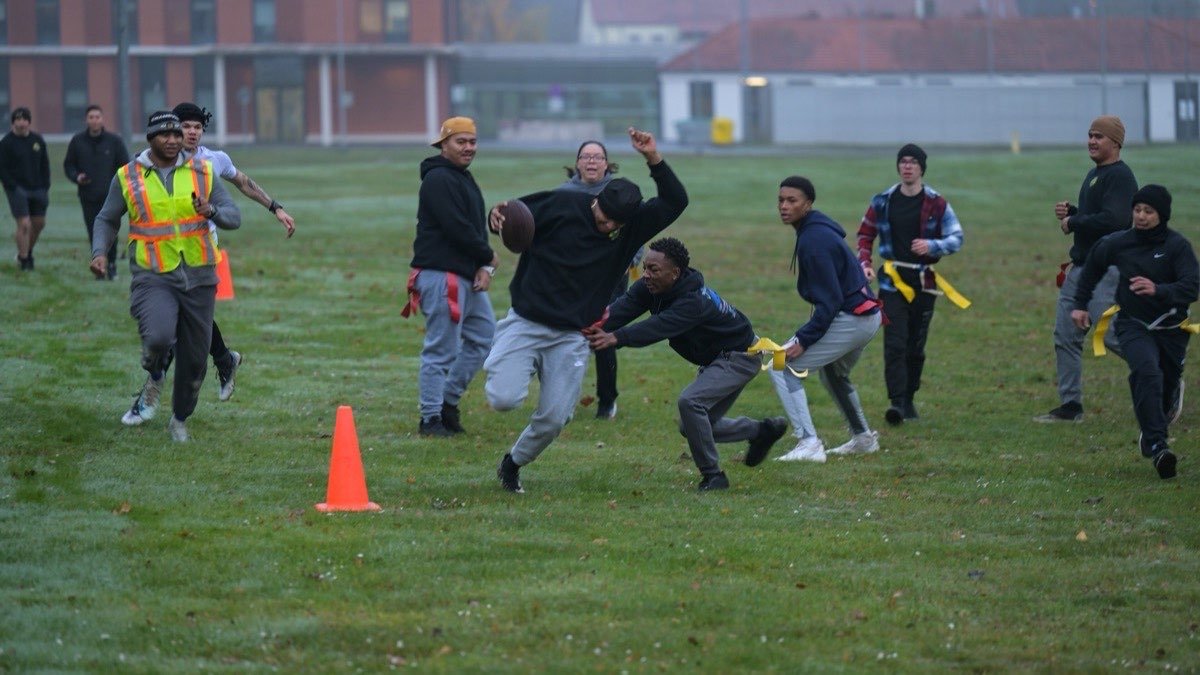
There is also the amateur layer. Across the country people play informal matches in parks and gardens before lunch - a tradition widely called the Turkey Bowl, usually played in unsuitable footwear, and responsible for a reliable spike in hospital visits every year.
The football is not always good
It is worth being honest that the Thanksgiving fixtures have a mixed record as sport. The hosting arrangement is fixed rather than earned, so two of the three games are played by whichever teams happen to be in Detroit and Dallas that season, regardless of form. Some years that produces a meaningful match between contenders; other years it produces something that a neutral would not otherwise watch.
There is also a long-running argument about fairness. A team playing on Thursday has had three days fewer to recover than usual, and the clubs guaranteed a home game every year get a schedule advantage that nobody else does. Proposals to rotate the hosts come up periodically and go nowhere, because the tradition is worth more to the league than the symmetry.
A holiday with a complicated history
It is worth saying plainly that Thanksgiving itself is not a simple holiday. The founding story taught in American schools for generations skates over the dispossession of Native peoples, and for many Indigenous Americans the fourth Thursday in November is a day of mourning rather than celebration. That is a real and continuing argument, and the football does not resolve it.
The oldest habit in the sport
What the games represent, in a sport that reinvents itself constantly, is one of the few things that has not changed. The rules are different, the ball is a different shape, the players are unrecognisable in size and speed, and the money involved has gone from nothing to extraordinary. But Americans were watching football after Thanksgiving dinner before any of that, and they will be this year.