
The largest sporting business in the United States was founded in a car dealership in a mid-sized Ohio town, by men sitting on the running boards of the stock because there were not enough chairs. Almost nothing about that meeting suggested it would last.
Professional football existed well before 1920. Players had been paid in western Pennsylvania and Ohio since the 1890s, and by the end of the First World War there was a loose circuit of town and factory teams across the industrial Midwest: Canton, Akron, Massillon, Dayton, Columbus, Hammond, Decatur. They were serious teams with serious players. They had no league.
The problem the owners had
Without a league, three things kept going wrong. Teams bid against each other for the same players, who would sign with whoever paid most that week and sometimes switch mid-season. College players were quietly recruited while still at university, which produced scandals when it came out. And there was no way to settle who was champion, which meant every claim was a newspaper argument rather than a result.
The owners wanted the same thing league founders always want: a cartel. Agreed rules on contracts, a shared understanding that a player under contract to one club would not be signed by another, and some mechanism for deciding a title.
The showroom
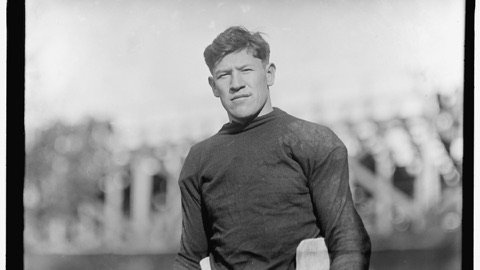
The decisive meeting took place in September 1920 in Canton, Ohio, at the Hupmobile car dealership belonging to Ralph Hay, who owned the Canton Bulldogs. Representatives of teams from Ohio, Indiana, Illinois and New York agreed to form the American Professional Football Association, set a nominal franchise fee that nobody appears to have actually paid, and elected Jim Thorpe as president.
Thorpe's election was a publicity decision and everyone involved knew it. He was the one name in the room that newspapers outside Ohio would recognise. The actual administration fell to the owners, who had no office, no staff and no standardised schedule.
The league's first season had no fixed fixture list. Teams arranged their own games, played different numbers of them, and the title was decided by a vote the following spring.- PuroGoal
A league in name only
The first few seasons were chaotic in ways that are hard to square with the modern product. Clubs scheduled themselves, which meant a team could pad its record against local amateur sides. Some franchises folded mid-season. Championships were awarded retrospectively at league meetings, and at least one was disputed for decades afterwards.
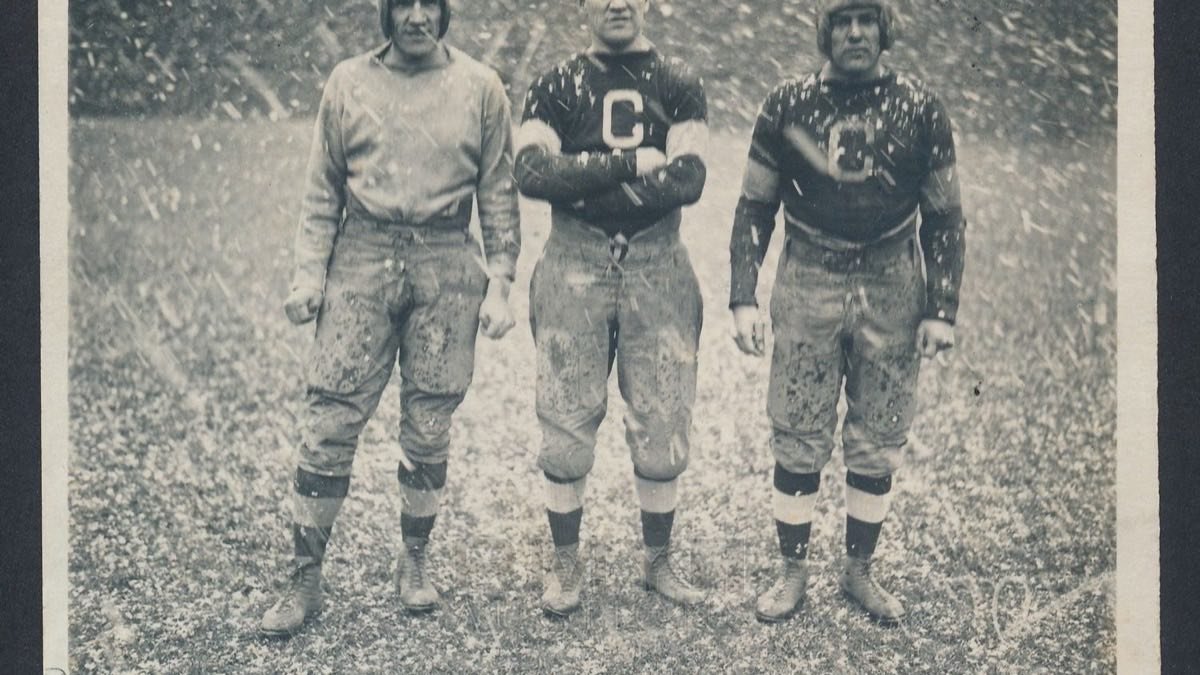
The membership list reads like a gazetteer of small industrial America: Akron Pros, Dayton Triangles, Rock Island Independents, Muncie Flyers, Decatur Staleys, Rochester Jeffersons. Of all the clubs that passed through those early years, only two survive continuously into the present - the Decatur Staleys, who moved to Chicago and became the Bears, and the Chicago Cardinals, who are now in Arizona. Green Bay joined in 1921 and is the great exception to everything else on this page: a small-town club that never moved.
The Pro Football Hall of Fame is in Canton rather than in a major city for exactly one reason: the league was founded there. The town made its case on the history, and the hall opened in 1963 a short distance from where the showroom had stood.
What the players were paid
Professional football in the 1920s was not a career. Pay was by the game, sometimes by the quarter, and a good player could expect roughly what a skilled tradesman earned for a day's work. Almost everyone had another job. Linemen worked in steel mills and mines through the week and played on Sunday, which is one reason the early league was concentrated in industrial towns: that was where the players already lived.
Travel was by train and sometimes by car, equipment was bought by the players themselves, and injuries were handled by whoever was available. There was no pension, no insurance and no guarantee that the club would still exist in a month. The men who built the league were not gambling on a fortune; most of them simply liked playing and had found somewhere that would pay them something for it.
The men who made it stick
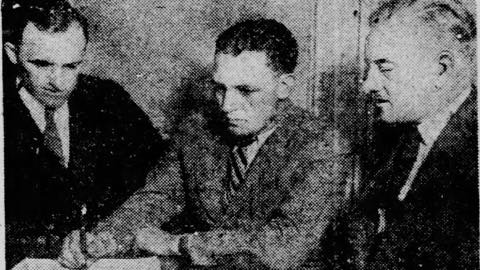
The organisation survived because a handful of people treated it as a business rather than a hobby. George Halas, who ran the Decatur team and then the Chicago Bears, spent half a century pushing the league towards a proper schedule, shared rules and a draft. Joe Carr, who took over as president in 1921, imposed contracts, banned the signing of college players before their eligibility ended, and required teams to post a bond so they could not simply disappear mid-season.
Those were unglamorous administrative decisions, and they are the reason the league outlasted its rivals. Several competing professional leagues appeared over the following decades, some of them well funded. The founding organisation absorbed or outlived all of them.
From Canton to everywhere
The move away from small towns happened quickly. Big-city franchises could sell more tickets, and by the 1930s the league had settled into the major markets, with the New York Giants, the Bears, the Packers and others providing a stable core. The league introduced a championship game, a player draft, and divisions - the structures that turned a collection of clubs into a competition.
What is striking, a century on, is how little of the founding meeting was visionary. Nobody in that showroom was planning a national institution. They were trying to stop each other from stealing players. The institution happened because the agreement held.