Every December two teams that will not be in anyone's championship conversation play a football game that the whole country watches. The Army-Navy game is the one fixture in American sport where the result matters enormously and the standings do not matter at all.
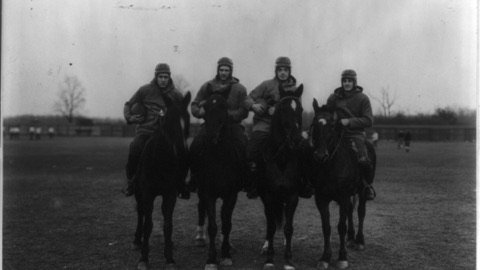
The first meeting was in 1890, at West Point, after a Navy cadet issued the challenge. Navy won it. The two academies have played almost every year since, which makes it one of the oldest continuously contested rivalries in American football, and the interruptions tell their own history: a suspension in the 1890s after the bad feeling got out of hand, and gaps during wartime when both institutions had more pressing business.
A game with a fixed place in the calendar
It is traditionally the last game of the regular college season, played in December, often in Philadelphia - a neutral city roughly halfway between Annapolis and West Point. Being last is part of the appeal. By the time it is played, the national championship picture has been settled by other teams, and the broadcast has the afternoon to itself.
The setting is unmistakable. The Brigade of Midshipmen and the Corps of Cadets march onto the field before kickoff, in formation, in full dress. The stands are divided into two solid blocks of uniforms. Nothing about the presentation is apologetic.
The traditions
Two of them stand out. In the week before the game each academy sends a group of students to spend the week at the other - the "prisoner exchange" - and they are presented at midfield before kickoff. And at the end of the match, both teams stand together in front of each student body and sing both alma maters, the losing side's first. The winners stand with the losers while it is sung, and then are sung to in turn.
There is also a long tradition of elaborate pranks in the run-up, mostly involving mascots, and an equally long tradition of presidents attending. A sitting president at the game will typically watch one half from each side, crossing the field at the interval, a piece of political choreography that is taken entirely seriously.
At the end of the game both teams line up and sing the losing academy's song first. Nobody leaves the field until it is finished.- PuroGoal
Why the football is different
Service academy teams operate under constraints no other programme faces. Admission requires meeting military standards, every player takes a demanding academic load, and graduates owe years of active service. The practical consequence is that the academies cannot recruit the largest, fastest players in the country, because those players want a professional career and the academies cannot offer a fast route to one.
So they play differently. Army and Navy have both leaned for decades on option running games - triple-option and flexbone offences that depend on timing, discipline and endless repetition rather than on individual mismatches. It is unfashionable, it frustrates opponents who never see it, and it is a rational response to the roster they can actually assemble.
The first instant replay shown on American television happened during an Army-Navy broadcast in 1963. The director had to explain to viewers that the touchdown was not being scored a second time.
The games people remember
The fixture has produced the usual share of close finishes and bad weather, and a few matches that outgrew it entirely. The teams met as unbeaten national contenders more than once in the 1940s, when the academies were briefly among the strongest programmes in the country and the game decided a national title. Those years are long gone and nobody at either academy pretends otherwise.
The 2020 edition was unusual for a different reason. With crowds restricted during the pandemic, the game was moved to Michie Stadium at West Point and played in front of the two student bodies alone. By most accounts it was one of the better atmospheres the rivalry has produced, which says something about who the occasion is actually for.
The third academy
Air Force joined the picture when its academy was established, and the three service schools now compete each season for the Commander-in-Chief's Trophy, awarded on the results of the games between them. It adds a competition that actually has a table to a rivalry that otherwise refuses to be measured.
Even so, Army-Navy is the one that carries the weight. The Air Force games matter; this one is different in kind.
What the rest of football gets from it
In a sport that has become a very large business - with contract disputes, television money and a steady traffic of players between teams - the Army-Navy game is a yearly reminder of what college football was supposed to be, and a demonstration that the appeal does not actually depend on the stakes.
The players in it will not be drafted. Most will be commissioned officers within months. Some will serve in places where the result of a December football match is the least significant thing in their lives. They play it anyway, as hard as it can be played, and several million people who have no connection to either academy watch because the whole thing is visibly about something.