
Twelve yards, one ball, one goalkeeper, and a whole tournament hanging on whether a tired player's standing foot slips. The penalty shootout is widely described as a lottery and almost as widely defended, mostly because the alternatives football tried first were considerably worse.
Knockout football has always had the same problem: two teams play, nobody wins, and somebody has to go through. For most of the sport's history the answer was a replay - play the whole match again, days later, on another pitch. That works for a domestic cup in one country. It does not work for a tournament with a fixed schedule, travelling squads and a stadium booked for one night.
When a coin decided
The fallback was to draw lots. A referee would toss a coin or draw a disc, and one team went home. This was not a theoretical rule used once in an obscure qualifier - it decided a European Championship semi-final in 1968, when Italy went through against the Soviet Union after a goalless match because of the toss. Italy went on to win the tournament.
Players and supporters found this intolerable, and understandably so. Months of qualifying, two hours of football and a coin in a referee's hand is not a competition; it is a raffle with extra steps.
The invention
Proposals for a kicking competition came from more than one direction at around the same time. A German referee named Karl Wald pushed the idea through his regional association and then upwards; a similar proposal came out of Israeli football. The lawmakers approved the shootout in 1970, and it entered the game as the standard way of separating teams who could not be separated.
The format has stayed almost unchanged since: five kicks each, alternating, sudden death if still level. The main modern debate has been about the order - whether the team kicking first has a measurable advantage - and various alternatives have been trialled without being widely adopted.
Panenka, 1976
The first major final decided by a shootout came quickly. In 1976 Czechoslovakia and West Germany finished level in the European Championship final, and it went to penalties. With the title on the kick, Antonin Panenka ran up as if to strike it hard, then gently chipped the ball down the middle while the goalkeeper dived away. It is one of the most audacious things anyone has done in a football match, and it now carries his name as a noun: a Panenka.
A coin toss is unfair and nobody's fault. A missed penalty is unfair and feels entirely like somebody's fault. That is the whole problem.
The World Cup learns to dread them
The World Cup's first shootout came in 1982, in a semi-final between West Germany and France that had already produced one of the tournament's most notorious incidents. By 1994 the competition had its first final settled that way, when Brazil beat Italy in Pasadena and Roberto Baggio - the player who had carried Italy through the knockout rounds - put the decisive kick over the bar. The photograph of him standing with his hands on his hips is better known than any goal he scored.
The 2006 final also went to penalties, with Italy beating France. Entire national footballing identities have been built on shootout records: some countries are described as good at them, others as cursed, and the players grow up hearing it.
Before shootouts existed, some competitions separated level teams by counting corners, and others simply replayed the match. The replay solution is still used in a few domestic cups, which is why the occasional knockout tie there goes to a second match rather than straight to penalties.
Is it really a lottery?
Players and coaches increasingly say it is not. Preparation has become serious: goalkeepers study which way individual takers go under pressure, squads rehearse the long walk from the halfway line, and sports psychologists work on routines designed to keep the process identical whether it is a training session or a semi-final.
What cannot be rehearsed is the condition the players are in. A shootout happens after two hours of football, in front of a crowd, with cramp setting in and a tournament ending either way. The skill involved is not kicking a ball twelve yards. It is doing something simple while everything around you insists that it is not simple at all.
The goalkeeper's half of it
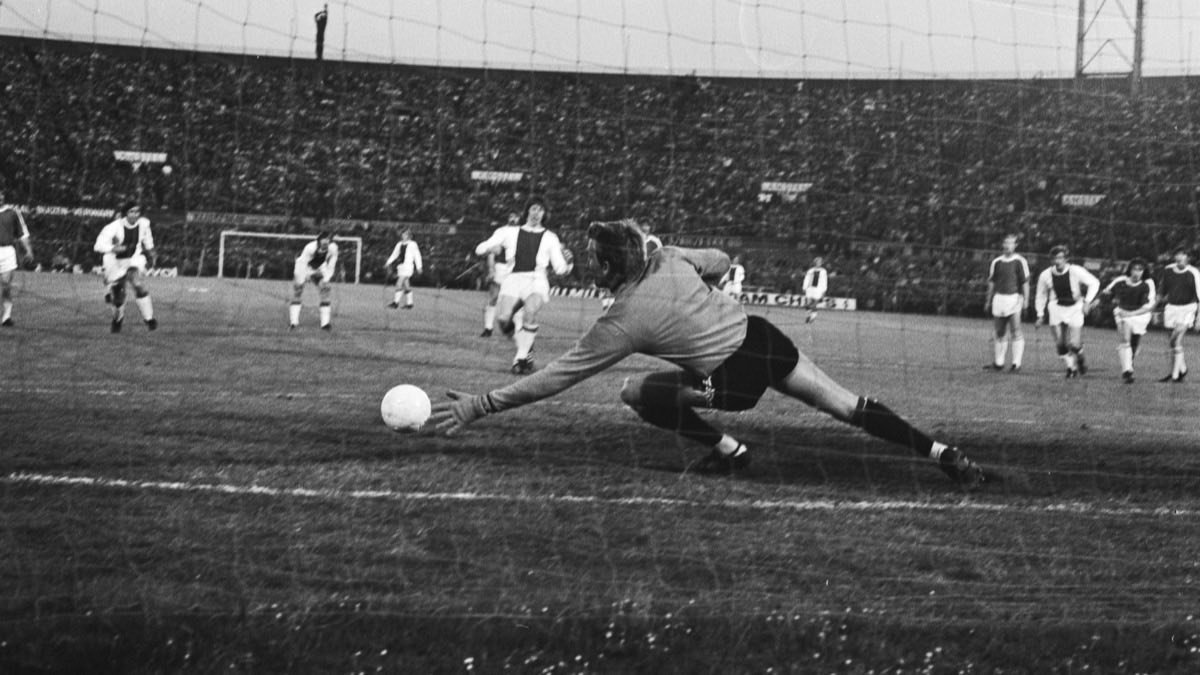
Shootouts are usually described from the taker's point of view, which understates the other job. A goalkeeper in a shootout has nothing to lose in reputation and everything to gain, which is a rare position in football, and the good ones use it. They take their time walking to the line. They stand slightly off centre to make one side look more inviting. They talk, or deliberately do not.
Research into saved penalties has become an industry: which foot the taker strikes with, where they have gone in the past under similar pressure, whether they look at the ball or the goal during the run-up. Some goalkeepers now go into tournaments with notes taped to a water bottle. It does not make saving a well-struck penalty likely - the geometry is still against them - but it has turned a guess into a calculated one.
The cruelty, and why it stays
Nobody has proposed a better system that football has been willing to accept. Replays do not fit modern calendars, extra time already exhausts the players, and the stranger suggestions - fewer players on the pitch, counting corners, deciding by shots on target - all shift the unfairness somewhere else rather than removing it.
So the shootout remains: the only part of football where one individual is isolated, given a job that looks easy, and watched by millions who will remember the outcome for the rest of his career. It is the fairest cruel thing the sport has managed to invent.