
For roughly sixty years the best baseball in America was played in two places at once. One of them had newspaper coverage, permanent ballparks and a World Series. The other had better players than anyone was willing to admit, and it was built almost single-handedly by a former pitcher from Texas.
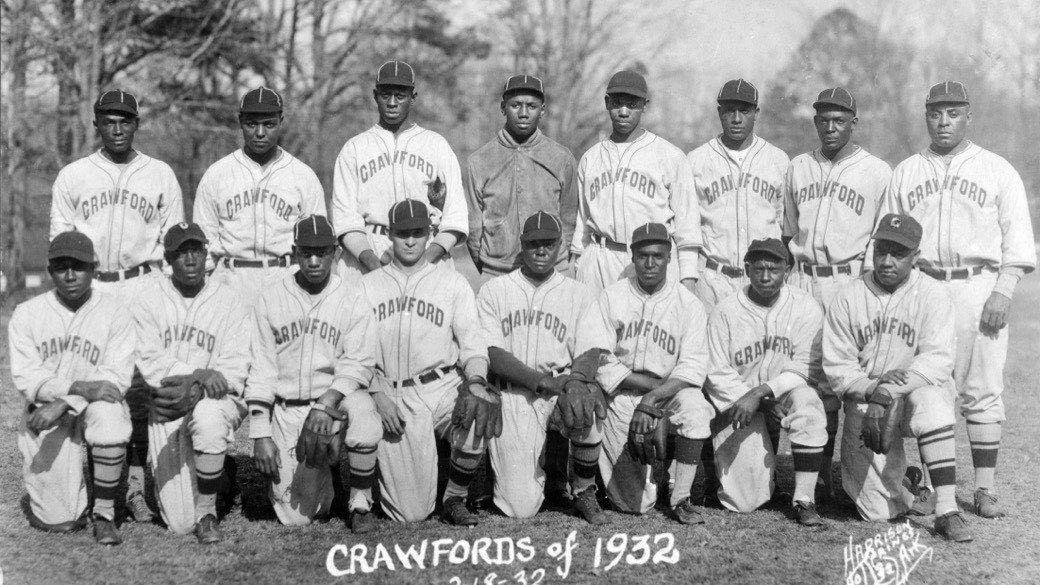
There was never a written rule barring Black players from organised baseball. There did not need to be. A handful played in the professional leagues in the 1880s, the door closed by informal agreement before the end of that decade, and it stayed closed until 1947. What filled the gap was an entire parallel world of teams, leagues and travelling clubs.
Andrew Foster, pitcher
Rube Foster was a dominant pitcher before he was anything else, good enough that his nickname reportedly came from beating a celebrated white pitcher of the day in an exhibition. He moved on to managing, then to owning the Chicago American Giants, and discovered that he had an unusual gift for organisation.
His frustration was structural. Black teams were strong, popular and completely dependent on white booking agents who controlled access to ballparks and took a cut of everything. Without a league of their own, clubs had no schedule, no standings and no leverage.
Kansas City, 1920
Foster called a meeting of team owners at a YMCA in Kansas City and came out of it with the Negro National League. He wrote the constitution, arranged the schedule, and in the early years personally covered the costs of clubs that could not meet payroll, on the principle that a league with a bankrupt member was not a league.
It worked. For the first time Black professional baseball had standings that meant something, a championship worth winning and a product that could be advertised in advance. Rival circuits appeared in the east, and a Negro League World Series followed within a few years.
The baseball itself
The style was faster and more aggressive than the major league game of the same period. Bunting, base stealing, the hit and run and constant pressure on defences were standard rather than occasional, partly as tactics and partly because crowds paid to be entertained.
The talent was extraordinary. Josh Gibson was a catcher who hit with a power that became folklore. Oscar Charleston was described by those who saw both as the equal of any outfielder in the game. Cool Papa Bell ran the bases in a way that generated stories nobody has ever been able to verify or disprove.
The leagues were not a lesser version of baseball. They were the same sport, played by men kept out of the other building.- On what the record now recognises
Life on the road
The conditions were punishing. Teams travelled enormous distances by bus, often playing on consecutive days in different states. Hotels and restaurants frequently refused service, so players ate on the bus and slept in it. Doubleheaders against local clubs were scheduled on days off because the gate money was needed.
Players also went abroad. Winter leagues in Cuba, Mexico, Puerto Rico and the Dominican Republic paid well and, crucially, treated Black American players as professionals rather than problems. Several of the best spent long stretches of their careers outside the United States for exactly that reason.
Foster's decline
The work consumed him. Foster was running a club, a league and much of the sport's business at once, and by the end of the 1920s his health had broken down badly. He was hospitalised and died in 1930, and the league he built did not long survive the Depression that arrived with his illness.
A second wave of leagues emerged in the 1930s and prospered through the war years, with the East-West All-Star Game in Chicago drawing enormous crowds. For a decade or so, Black baseball was one of the largest Black-owned business enterprises in the country.
Integration, and the cost of it
When Jackie Robinson signed in 1945 and played in Brooklyn in 1947, the Negro Leagues began to die almost immediately. Major league clubs signed away the best players, often with little or no compensation to the teams that had developed them, and Black fans understandably followed the players.
Integration was the right outcome and it destroyed a functioning institution. Owners, managers, umpires, bus drivers and business staff lost their livelihoods, and almost none of them were hired into the organisations that had absorbed their players.
Negro League records were kept inconsistently, because newspapers covered the games unevenly and schedules included many games against non-league opponents. Researchers have spent decades reconstructing box scores from local papers, and the work is still going on.
The East-West Game
The annual East-West All-Star Game, played at Comiskey Park in Chicago from the 1930s, became the single biggest event in Black baseball. Fans voted for the teams through the Black press, and the game regularly drew crowds larger than many major league contests.
It was also a social occasion that extended well beyond the ballpark, with special trains run from southern cities and a weekend of events built around it. For the clubs it was the most reliable payday of the year, and for the players it was the one day they were covered by the national press.
Putting it in the book
In recent years Major League Baseball formally recognised several Negro League seasons as major league play, and the statistics of those seasons were incorporated into the official record. It was a bookkeeping decision with a large meaning: the men who played in those leagues are no longer an asterisk alongside the history, they are part of it.
Rube Foster was elected to the Hall of Fame decades after his death. He is usually described there as the father of Black baseball, which undersells him slightly. He was the man who looked at a sport that had shut the door on him and built a second one next door.