
The first World Series was not organised by baseball. It was arranged privately between two club owners who were tired of a war they could not win, played as a best-of-nine, and very nearly never happened again. The century of autumn championships that followed grew out of that improvised agreement.
By 1903 American professional baseball had spent three years at war with itself. The National League had existed since 1876 and regarded itself as the established order. The American League had declared itself a major league in 1901 and had been aggressively signing the National League's players ever since, with considerable success.
The war before the peace
Raiding rosters was the American League's entire strategy, and it worked because National League salaries were capped by agreement among owners. Dozens of established players changed leagues for better money. Lawsuits followed in several states, with inconsistent results, and the costs mounted on both sides.
A peace agreement was signed early in 1903. The two leagues recognised each other, agreed to respect contracts and stopped the raiding. What the agreement did not include was any provision for a championship between them, which turned out to be an oversight worth fixing.
Two owners and a letter
The Pittsburgh Pirates had won the National League comfortably. The Boston Americans had won the American League. Barney Dreyfuss of Pittsburgh wrote to Henry Killilea of Boston proposing a post-season series, the two men agreed terms between themselves, and that was the entire authorisation.
They settled on a best-of-nine, an unusual length chosen mainly to maximise the gate. The players' shares were negotiated separately, and the Pittsburgh owner put his own share into the players' pool, which is why the losing side went home with more money per man than the winners.
Huntington Avenue and Exposition Park
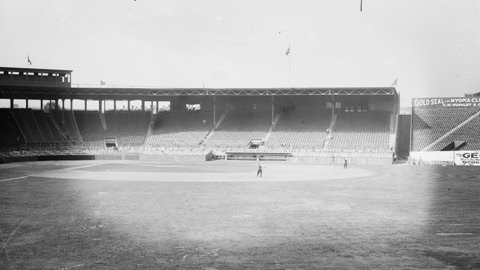
The grounds bore no resemblance to a modern stadium. Boston's Huntington Avenue Grounds had a dirt outfield in places and a toolshed in play. Overflow crowds were accommodated by roping off part of the outfield and letting spectators stand there, with a ground rule turning any ball hit into the crowd into a triple.
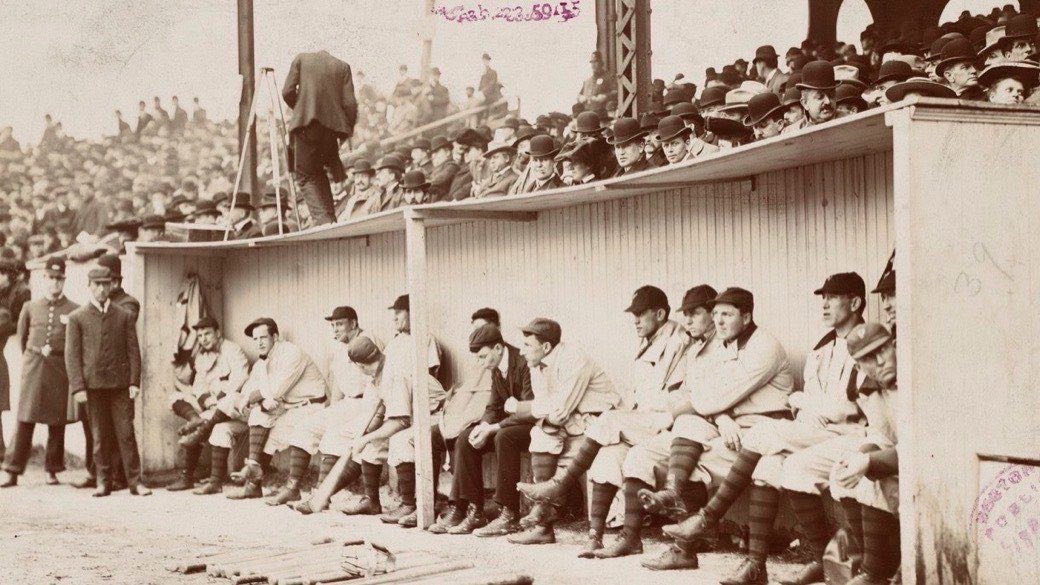
That rule produced an extraordinary number of triples across the series, which is the kind of detail that makes the statistics of early baseball so difficult to compare with anything since. Police on horseback were used to push the crowd back when play required it.
Two owners wrote to each other, agreed a nine-game series and accidentally invented the autumn ritual of American sport.- On how the World Series began
The series itself
Pittsburgh won three of the first four games and looked likely to take it. Boston then won four in a row to claim the championship five games to three. Cy Young, already a veteran and the most celebrated pitcher of the era, started multiple games for Boston, as pitchers routinely did when rotations were three men deep.
Pittsburgh was weakened by injuries and by the death of a pitcher earlier in the season, and their staff was stretched thin by the end. Honus Wagner, the finest player on either side, had a poor series by his own standards and took it hard enough to mention it for years afterwards.
The Royal Rooters
Boston's travelling supporters, known as the Royal Rooters, went to Pittsburgh and conducted what amounted to a sustained campaign of psychological warfare. They brought a band, occupied a block of seats and sang a popular song of the day over and over with improvised lyrics aimed at individual Pittsburgh players.
Participants on both sides later credited the singing with genuinely affecting the Pittsburgh team. It is one of the earliest documented cases of organised crowd behaviour being treated as a factor in a result, and it established a tradition of travelling support that the sport has never quite matched since.
The year it did not happen
There was no World Series in 1904. The New York Giants won the National League and their manager, John McGraw, refused to play the American League champions, dismissing the younger league as unworthy. The refusal was personal as much as institutional, and it was deeply unpopular with the public.
The backlash settled the question. For 1905 the two leagues wrote the championship into their joint rules, fixed it as a best-of-seven and made participation compulsory. From that point the World Series was an institution rather than a private arrangement.
The Boston club of 1903 was not yet called the Red Sox. The name came a few years later. Early newspapers referred to the team by several nicknames at once, which is why histories of the first World Series disagree about what to call the winners.
Cy Young, already a veteran
Boston's pitching rested heavily on a man who had been pitching professionally since the early 1890s and had already thrown more innings than most careers contain. Cy Young started three games in the series and relieved in another, which was unremarkable at the time and would be unthinkable now.
His presence is a useful reminder of how compressed early baseball history is. The award given annually to the best pitcher in each league carries his name, and the man it commemorates pitched in the first World Series ever played.
What survived
Almost everything about that first series was provisional: the format, the finances, the grounds, even the team names. What survived was the idea that the two leagues should settle the season against each other in public, in October, with the whole country watching.
The best-of-nine lasted only a few more years before the seven-game format became standard. The ropes holding back the outfield crowd disappeared. The arrangement between two owners who simply wanted a bigger gate became the oldest continuous championship in American professional sport.