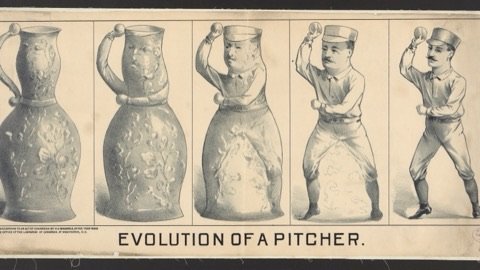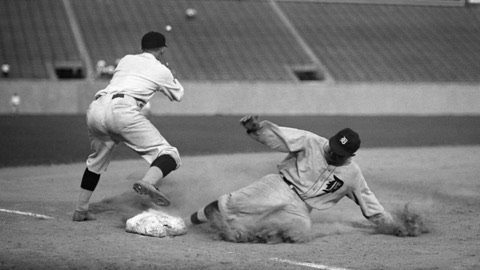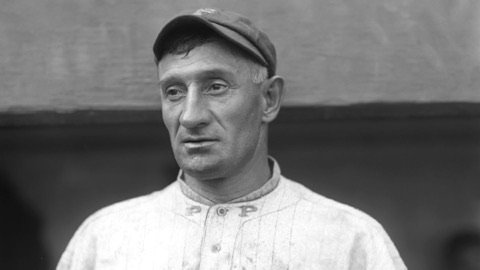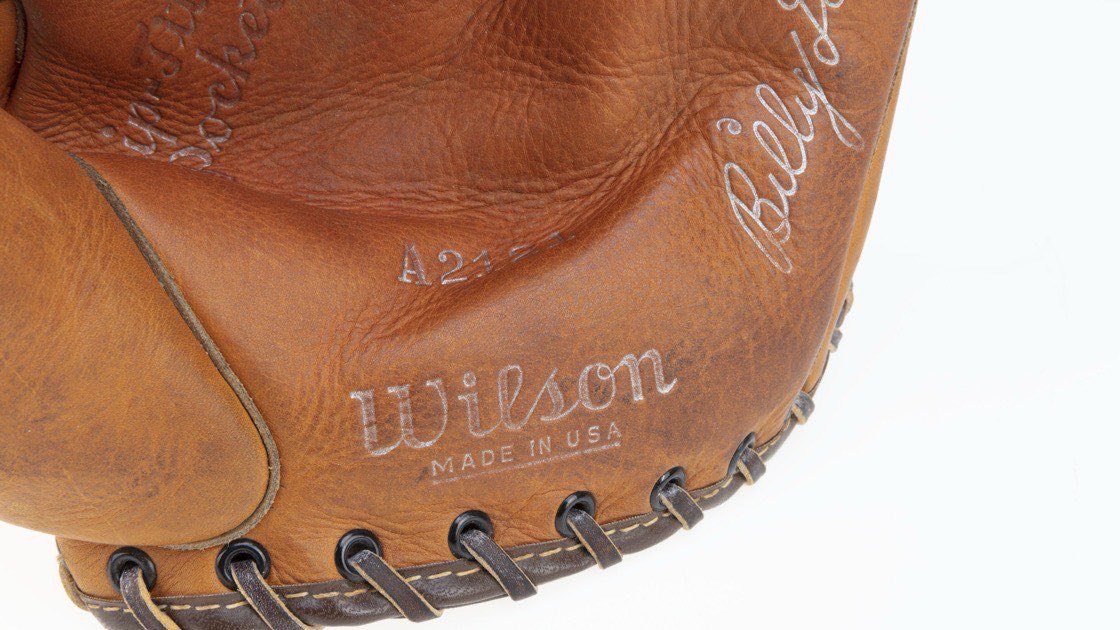

For the first decades of organised baseball, catching the ball with your bare hands was simply what you did, and a player who wore protection was considered soft. The equipment that every child now takes for granted had to overcome professional contempt before it could overcome anything else.
Early baseball was played with a ball that was softer than a modern one but still perfectly capable of breaking fingers, and it was thrown hard. Photographs from the 1870s show infielders with visibly damaged hands, and accounts of the period describe veterans whose fingers no longer straightened.
The first man to admit it hurt
The earliest documented use of a glove in a professional game is usually credited to a catcher in 1870, who wore a simple buckskin mitt and was mocked for it. Catchers had the strongest case: they were absorbing every pitch from a few feet away, and in that era they frequently stood well back and took the ball on the bounce for exactly this reason.
What changed professional opinion was less the pain than a star. Albert Spalding, one of the most admired pitchers of the 1870s, began wearing a flesh-coloured glove on his non-throwing hand. Because Spalding did it, it became acceptable, and because Spalding went into the sporting goods business, it also became purchasable.
What the first gloves actually were
They were not catching devices. Early gloves were thin leather covers, often with the fingertips cut off so a player could still throw, and their purpose was to take the sting out of the impact rather than to trap the ball. The ball was still caught with two hands against the body.
Padding came gradually, and with it a change in technique. As the glove became capable of holding a ball on its own, fielders could reach further, dive, and make one-handed catches that had previously been reckless. The equipment quietly expanded the range of every position on the field.
The webbing
The decisive innovation came from a working pitcher. Bill Doak proposed to a manufacturer in 1919 that a laced web be built into the space between thumb and forefinger, turning the glove into a pocket that could catch and hold the ball by itself. The design sold for decades and every modern glove is descended from it.
From there the evolution was mostly a matter of size, and the rules eventually had to intervene. Gloves grew until officials set limits on their dimensions, because a sufficiently large piece of leather starts to look less like protection and more like a net.
The glove began as an apology for soft hands and ended as the thing that made modern fielding possible.- On fifty years of leather
A different glove for every job
Specialisation followed. Catchers use a heavily padded mitt with no individual fingers. First basemen use a long, scooped mitt designed for digging throws out of the dirt. Infielders use small, shallow gloves because they need the ball out and thrown in a fraction of a second.
Outfielders use the largest gloves with the deepest pockets, since they are catching balls that have travelled a long way and nobody minds if it takes an extra moment to retrieve it. Pitchers often prefer a closed web, so the batter cannot see their grip through the leather.
Breaking it in
A new glove is useless. Players have spent a century developing rituals to soften the leather and shape the pocket: oils, shaving cream, hot water, steam, sleeping with a ball tied inside it. Manufacturers warn against most of these methods and sell pre-softened models, and players carry on anyway.
Professionals grow attached to individual gloves and will use one for years past the point where it looks respectable, having it repaired and relaced rather than replaced. A broken-in glove is fitted to one person's hand and cannot be transferred.
The rest of the armour
Protection elsewhere followed a similar path from ridicule to obligation. The catcher's mask was devised in 1877 by a Harvard player and derided as cowardly. Chest protectors came next. Shin guards were popularised by a major league catcher in the early 1900s and drew the same jeers.
Batting helmets took longest of all. Head protection was discussed for decades and resisted by players who found it uncomfortable or unmanly, and it became mandatory for new players only in the 1970s, with existing players allowed to carry on bare-headed.
Until the 1950s it was standard practice for fielders to leave their gloves lying on the outfield grass when their team came in to bat. Balls in play occasionally hit them. The rule requiring gloves to be taken off the field was introduced to stop it.
Making one
A glove is cut from steer or kip leather, with the better grades going into professional models, and assembled from dozens of separate pieces. The palm, the back, the finger stalls, the web and the lining are stitched and then laced together with leather cord threaded by hand through punched holes.
Much of the work still resists automation, which is why good gloves remain expensive and why a damaged one is usually relaced rather than discarded. The lacing can be replaced several times over a glove's life, and a well-kept one outlasts the player's career.
Why it matters more than it looks
Fielding statistics from the nineteenth century are full of errors, in quantities that look absurd now, and a large part of the explanation is simply that men were catching hard-hit balls with their bare hands on uneven ground. The glove did not just protect players. It raised the standard of the sport.
It also produced the one piece of sporting equipment that people keep for life. A bat breaks, a ball is lost, a uniform is outgrown. A glove moulds itself to one hand over several seasons and tends to end up in a cupboard rather than a bin, which is why so many households still have one.