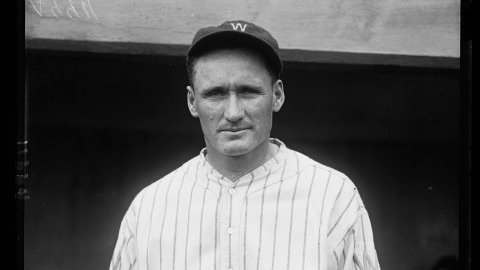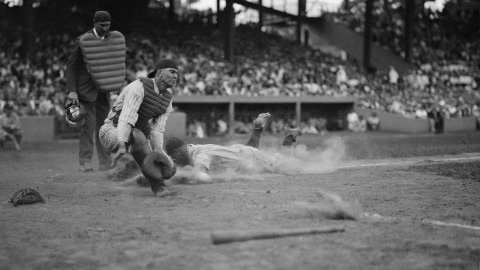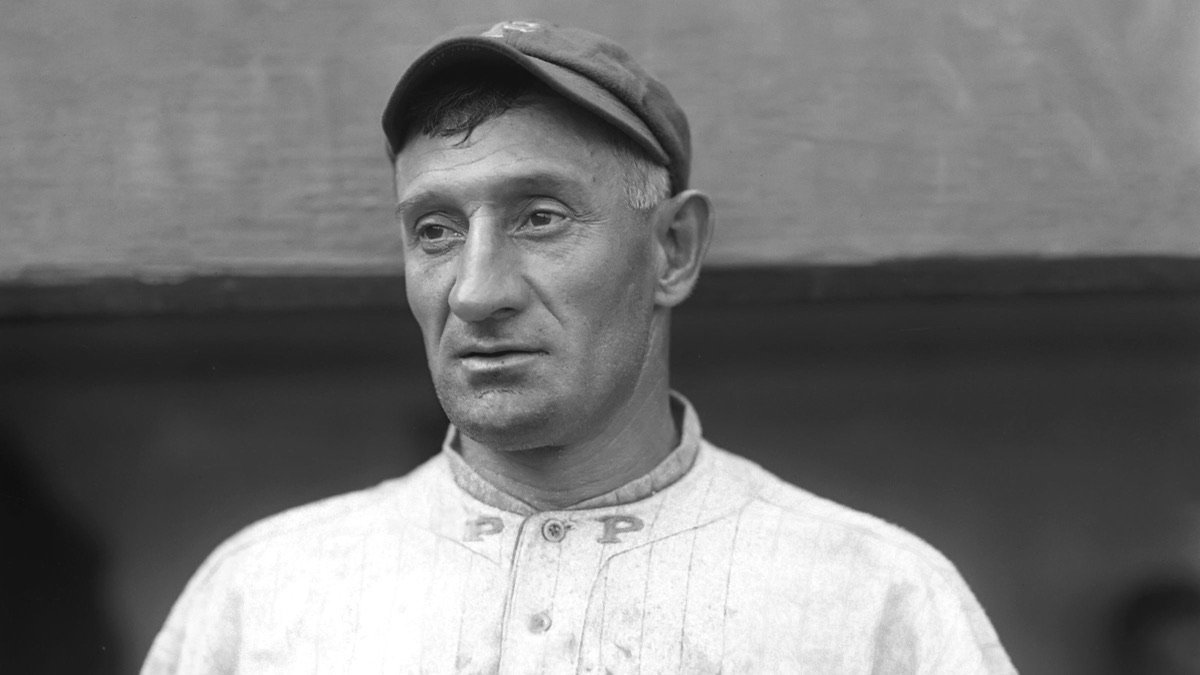

Most people who recognise the name Honus Wagner have never seen him described as a ballplayer. They know him as a picture on a small piece of cardboard, printed before the First World War, that collectors chase like treasure. The player underneath that legend deserves better.
John Peter Wagner was born in a Pennsylvania coal town in 1874, one of several brothers who worked in the mines as boys before baseball offered a way out. He was bow-legged, barrel-chested and built like a man who had carried heavy things for a living, which he had. He looked nothing like an athlete and moved like one of the best who ever played.
The Flying Dutchman
The nickname came from his German heritage and his surprising speed, and both halves of it confused people who had only seen photographs. Wagner's hands were enormous. Contemporaries described him scooping up a ground ball along with a fistful of infield dirt and pebbles and throwing the whole load to first base, where the pebbles arrived shortly after the ball.
He spent most of his career with the Pittsburgh Pirates, won batting titles repeatedly, and was regarded by almost everyone who watched both men as the equal of Ty Cobb at the plate and far his superior in the field. The position he played, shortstop, was then considered a defensive job for small men who could not hit. Wagner quietly ended that idea.
A different kind of star
Where Cobb was combustible, Wagner was almost comically good-natured. He signed autographs for hours, played exhibition games in small towns for the pleasure of it, and stayed with the Pirates organisation as a coach long after his legs had gone. Players from later generations remembered an old man in uniform telling stories in the dugout and demonstrating, slowly, how to turn a double play.
He also carried a quiet moral seriousness that mattered in an era when baseball's relationship with gambling was loose at best. Wagner was known as a man who could not be bought, which in 1919 would turn out to be a rarer quality than anyone wanted to admit.
The card
Between 1909 and 1911 the American Tobacco Company issued an enormous set of small cards, slipped into cigarette packs, that collectors now call T206. Hundreds of players appeared in it. Wagner's card was printed and then pulled from production almost immediately, which is why only a few dozen examples are known to exist today.
Why it was pulled has been argued about for more than a century. The story told most often is that Wagner objected to his face being used to sell tobacco to boys. A competing account holds that he simply wanted to be paid properly for the use of his image. The two explanations are not mutually exclusive, and the company left no tidy record either way.
A card printed by the thousand would be worth nothing. A card printed and then stopped is worth everything.- The arithmetic of scarcity
How scarcity became legend
For decades the Wagner card was simply a curiosity among collectors, a gap in the set that nobody could fill. As organised card collecting grew into a serious market in the second half of the century, that gap turned into the most famous absence in the hobby, and each known copy acquired its own documented history of owners.
Today a genuine T206 Wagner is the most valuable baseball card in the world, and individual examples are tracked and catalogued the way paintings are. The irony is thick: a man who may have refused to advertise cigarettes is now best known for the cigarette card he refused to appear on.
What he actually did on the field
It is worth saying plainly, because the card has swallowed the player. Wagner led his league in batting average more often than almost anyone in the game's history. He stole bases in large numbers. He played shortstop, and when his team needed him elsewhere he played every other position on the field competently, including pitcher.
He was also the best player on the Pittsburgh side that reached the very first World Series in 1903, and he was still there when the Pirates won the title a few years later. The modern statistical measures that try to capture a player's total value, defence included, rate him among the handful of greatest players the sport has produced.
When the Hall of Fame opened its first class in 1936, five men were chosen. Wagner tied with Babe Ruth for the second-highest vote total, behind only Ty Cobb. He is the only shortstop in that founding group.
The 1909 championship
Pittsburgh met Detroit in the World Series of 1909, which meant Wagner against Cobb, the two best hitters in baseball and temperamental opposites. The newspapers sold it as a duel and the public treated it as one, and for once the contest lived up to the advance billing.
Wagner outplayed the younger man comprehensively, hitting well and stealing bases freely, and Pittsburgh won the title. A famous story has the two colliding at second base with Wagner coming off better, and like most good baseball stories it has grown in the retelling. The series result, at least, is not in dispute.
The long afterlife
Wagner coached for the Pirates into old age and became one of those figures a franchise keeps around because the city would not forgive its loss. A statue of him stands outside the Pittsburgh ballpark, moved from the old stadium when the team changed homes, and it shows him in his follow-through, bat finishing high.
He died in 1955, long enough to see the colour line broken and the game modernise around him. The small tobacco card that carries his face will probably outlast every memory of how he played. That is a strange kind of immortality, and he would almost certainly have found it funny.