For 86 years, the Boston Red Sox waited. A team that had ruled early baseball sold its greatest talent to a rival — and spent nearly a century paying for it in the most painful way imaginable.
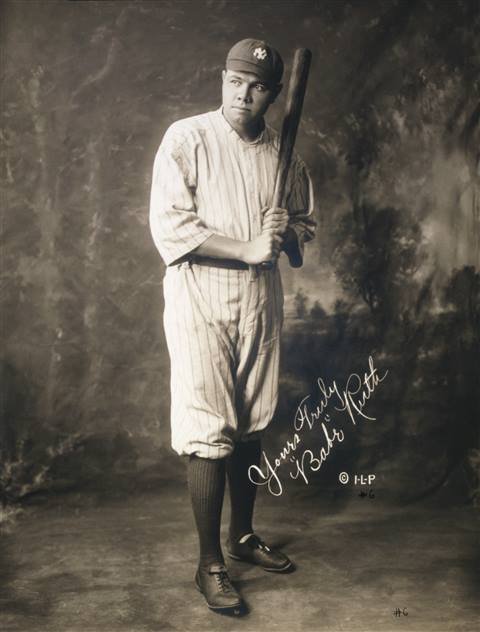
In the early twentieth century, the Boston Red Sox were one of baseball's dominant clubs, winning five of the first fifteen World Series. The New York Yankees, by contrast, had never won a championship. Then, after the 1919 season, Boston's owner sold a young pitcher and slugger named Babe Ruth — nicknamed "the Bambino" — to New York. What followed became one of the most famous superstitions in all of sport.
The sale that started it all
Babe Ruth had already shown flashes of brilliance in Boston, both on the mound and at the plate. But after the 1919 season, Red Sox owner Harry Frazee sold him to the Yankees for a sum widely reported as around 100,000 dollars, along with a loan secured against Fenway Park. The reasons have been debated for generations, but the consequences were not in doubt for long.
In New York, Ruth was moved to the outfield to bat every day, and he transformed the sport. He rewrote the home run record books, drew enormous crowds, and helped turn the Yankees into the most successful franchise in baseball. Boston, meanwhile, sank into decades of frustration.
The contrast could hardly have been sharper. Before the sale, the Yankees had never won a World Series, while the Red Sox had been among the game's early powers. In the years that followed, New York piled up championship after championship and Ruth became the most famous athlete in the country. The trade looked, in hindsight, like the moment two franchises swapped destinies.
Decades of heartbreak
The Red Sox were not a bad team for all 86 years — far from it. They reached the World Series several times and built rosters full of stars. But each promising run seemed to end in a uniquely cruel way, and fans began to speak only half-jokingly of a curse.
Boston lost the World Series in seven games on more than one occasion. The 1986 collapse, when a ground ball rolled through a fielder's legs at a decisive moment, became shorthand for the whole haunted era. By the late twentieth century, the idea that selling Ruth had doomed the franchise had a name, a folklore, and a grip on the city's imagination.
The phrase "Curse of the Bambino" was popularized by sportswriters and books that traced every Boston near-miss back to that 1919 transaction. Fans turned the superstition into a kind of shared identity. Hanging a Red Sox banner near rival territory, chanting at the Yankees, and bracing for late-season disappointment all became rituals of a fan base that had learned, over generations, to expect the worst at the cruelest possible moment.
"The Red Sox were trying to win, and the curse was always there to remind everyone what they were up against."— A common refrain among Boston fans
The comeback that broke the curse
The drought finally ended in 2004, and it ended against the Yankees themselves. In the American League Championship Series, Boston fell behind three games to none — a hole no team in major league baseball history had ever climbed out of in a best-of-seven series.
Then the Red Sox won four straight games to complete the greatest comeback the sport had seen, eliminating their oldest rival in the process. Carried by that momentum, Boston swept the World Series to win its first championship since 1918. The Curse of the Bambino, after 86 long years, was over.
No team in major league history had ever recovered from a three-games-to-none deficit in a best-of-seven series before Boston did it against the Yankees in 2004 — which made the curse-breaking run feel almost scripted.
A legend that outlived the drought
Once the title was won, the curse lost its power. The Red Sox went on to win several more championships in the years that followed, turning a franchise defined by suffering into one of baseball's most successful modern clubs. The superstition that had loomed for generations became, almost overnight, a piece of history rather than a living fear.
Whether anyone truly believed in a curse hardly matters now. The story endures because it captures something real about baseball: the weight of history, the bitterness of rivalry, and the way a single decision — selling one extraordinary player — can shadow a city for the better part of a century before a comeback finally sets it free.