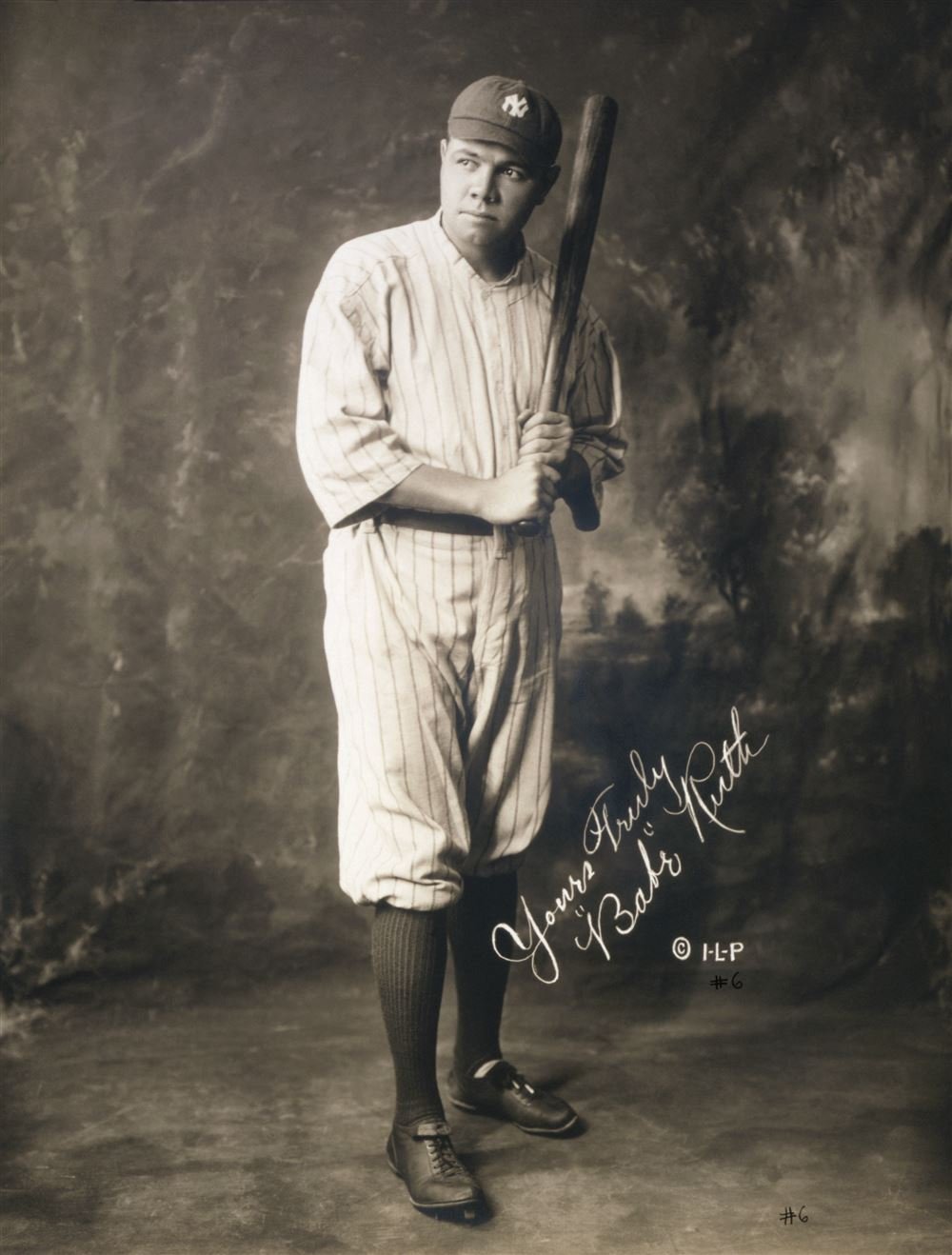
He began his career on the pitcher's mound and ended it as the most famous athlete on earth. George Herman Ruth swung a baseball bat harder than anyone before him — and in doing so, he turned a low-scoring pastime into the home-run game we know today.
George Herman Ruth was born on 6 February 1895 in Baltimore, Maryland. A restless, hard-to-handle boy, he spent much of his childhood at St. Mary's Industrial School for Boys, a reformatory and orphanage where a Catholic brother named Matthias introduced him to baseball. The game gave the young Ruth focus, and his raw talent was obvious from the start. By 19 he had signed his first professional contract, and the legend of "Babe" — a nickname pinned on him as the youngest player on his early team — had begun.
From the mound to the record books
Few fans remember it now, but Ruth first reached the major leagues as a left-handed pitcher for the Boston Red Sox. And he was excellent: he helped Boston win World Series titles and for years held a record for consecutive scoreless innings in the Fall Classic. But his bat was too valuable to keep idle between starts. Boston gradually moved him to the outfield so he could play — and hit — every day.
That decision changed the sport. In an era when teams scratched out runs one base at a time, Ruth simply hit the ball over the fence, and crowds poured in to watch him do it.
The Yankees and the curse
Before the 1920 season the Red Sox sold Ruth to the New York Yankees, a transaction that would haunt Boston for generations. In New York he became a phenomenon. He out-homered entire opposing teams, drew enormous crowds, and helped the Yankees win a string of pennants and World Series titles. The new ballpark that opened in the Bronx in 1923 was nicknamed "The House That Ruth Built," a tribute to how completely he had filled the seats.
Meanwhile, the Red Sox went decades without a championship. Fans came to call the long drought the "Curse of the Bambino," half in jest and half in genuine superstition, as if selling Ruth had cost Boston the favor of the baseball gods. The drought finally ended in 2004, more than 80 years after he left.
"Every strike brings me closer to the next home run."— Babe Ruth
A larger-than-life legend
Ruth was more than a great hitter; he was the first true sports celebrity of the modern age. He drew huge salaries, traveled the country on barnstorming tours, and lived loudly off the field. His personality was as outsized as his swing, and stories about him — some true, some embellished — became part of American folklore. Among the most famous is the "called shot" of the 1932 World Series, when he supposedly pointed toward the outfield before launching a home run to that very spot.
Ruth's 60 home runs in 1927 stood as the single-season record for more than 30 years, and his career total of 714 was not surpassed until Hank Aaron passed it in 1974. For much of the 20th century, "Ruthian" was simply shorthand for any feat of staggering power.
A legacy that outlived the man
Ruth played his final seasons back in the city where it started, finishing his career with the Boston Braves in 1935 before retiring. He was among the first class of players elected to the Baseball Hall of Fame in 1936. When he died of cancer on 16 August 1948, his body lay in state at Yankee Stadium, where tens of thousands of mourners filed past to say goodbye.
Records have since fallen and the game has changed many times over, but Ruth's place is permanent. He took a sport built on bunts and singles and taught it to swing for the fences. Generations later, every towering home run still carries a little of the Sultan of Swat.