
In the autumn of 1919 the best team in the American League lost the World Series, and within a year the sport was facing the possibility that the result had been arranged in advance. What followed changed how baseball was governed and gave the game its permanent cautionary tale.
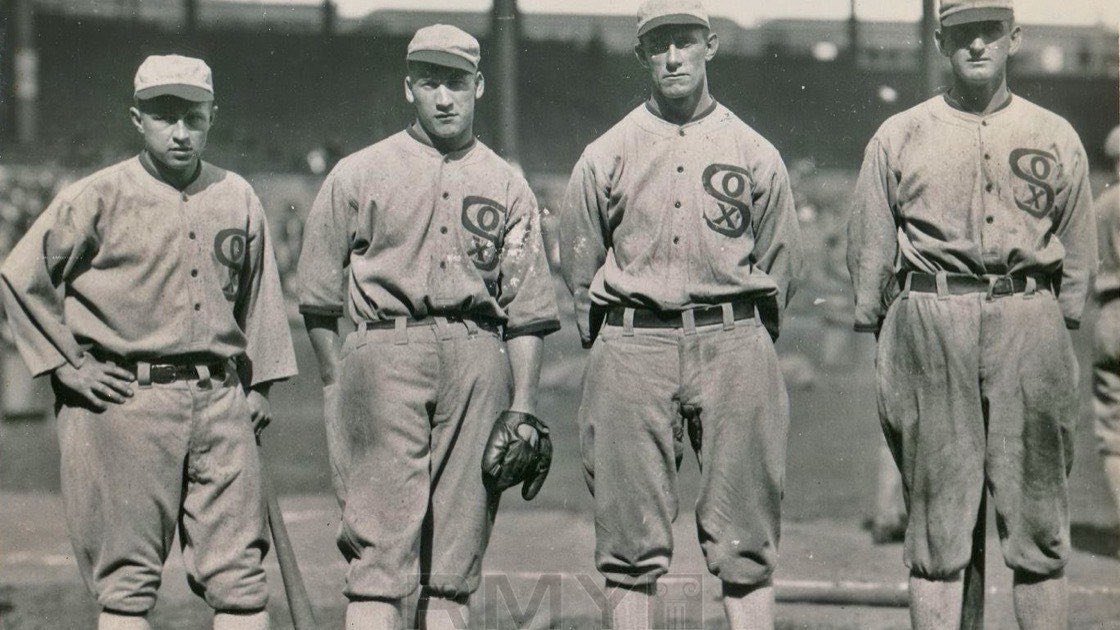
The Chicago White Sox were heavy favourites against the Cincinnati Reds. They had a formidable pitching staff, one of the finest hitters of the era in Joe Jackson, and a reputation as the strongest side in the game. They lost the series, played then as a best-of-nine, and the losing was strange enough that reporters noticed at the time.
A clubhouse with a grievance
Chicago's players worked for Charles Comiskey, an owner with a reputation for paying as little as the reserve system allowed him to. Players had no freedom to move between clubs and therefore no leverage. Resentment inside the clubhouse was well known around the league before the series began.
That resentment is the usual explanation for why a group of professional athletes would listen to gamblers at all, and it is probably part of the answer. It is not a complete one. Betting on baseball was widespread, loosely policed, and in some cities openly conducted in the stands.
What was alleged
The accusation was that eight Chicago players agreed to lose in exchange for payments from gamblers. Pitchers were said to have thrown deliberately hittable balls, fielders to have taken bad routes, hitters to have swung at pitches they would normally leave. Several of the men involved reportedly received far less money than they had been promised.
Reading the box scores now is an unsatisfying exercise. Some of the accused performed badly in exactly the ways described. Others played well. Joe Jackson, the most famous name on the list, hit better than anyone else in the series, which has fuelled a century of argument about his involvement.
The trial
A grand jury convened in Chicago in 1920 and several players gave statements. By the time the case reached trial in 1921 key documents, including signed confessions, had vanished from the prosecutor's office. The jury acquitted all the defendants, and the courtroom reportedly cheered.
The celebration lasted about a day. Baseball had already responded to the crisis by creating the office of Commissioner and handing it to a federal judge, Kenesaw Mountain Landis, with powers deliberately drafted to be close to absolute.
A court decided there was not enough evidence to convict. Baseball decided that was not the same as innocence.- The gap the ban was built in
Landis acts
The day after the acquittal, Landis banned all eight men from organised baseball for life. His statement made clear that he was not interested in the legal standard of proof. Any player who fixed a game, or sat in a room where fixing was discussed and failed to report it, would never play professionally again.
It was harsh, and it was effective. The ruling established that the sport's own authority operated independently of the courts, and the long shadow it cast is the reason baseball has treated gambling by participants as an unforgivable offence ever since.
Shoeless Joe Jackson
Jackson remains the heart of the story. He was functionally illiterate, had signed a statement he may not have fully understood, and gave accounts that shifted over the years. His supporters point to his performance in the series. His critics point to the money he admitted receiving and keeping.
Campaigns to have him reinstated have recurred for decades, backed by fans, writers and at least one state legislature. The famous plea said to have been made by a boy outside the courthouse, asking him to say it was not so, appears to be a journalistic invention, which has not slowed its circulation at all.
What it cost and what it bought
In the short term the scandal did real damage to public trust at a moment when the sport could not afford it. In the longer term it coincided with the rise of Babe Ruth and the lively-ball era, and the crowds came back faster than anyone expected.
What the affair bought was a structure. Before 1920 the sport was run by a committee of owners with every incentive to protect each other. Afterwards there was a single office with the authority to act against clubs and players alike, and that office still exists.
The rule that grew out of 1919 is still posted in every major league clubhouse. It warns that betting on a game you are involved in brings a permanent ban, and it has been enforced against figures far more famous than the men it was written for.
Why the fix was even possible
Players of that era had no freedom of movement. The reserve clause bound a man to his club indefinitely, so a player who thought he was underpaid had no alternative employer to go to and no union to argue for him. Salaries were set by owners who faced no competition for the service.
Gamblers operated openly in and around ballparks, and rumours of fixed games had circulated for years before 1919 without producing any serious investigation. The sport had created the conditions for exactly this crisis and then been astonished when it arrived.
The story that will not settle
More than a century later the Black Sox remain the most examined eight games in baseball history, and historians still disagree about who did what. Some of the accused almost certainly took money and played to lose. Others appear to have known and said nothing. At least one may have been swept up by association.
That ambiguity is why the story lasts. A clean morality tale would have been forgotten. What baseball got instead was a permanent reminder that the result on the scoreboard is the only thing the sport has to sell, and that it is more fragile than it looks.