
Before professional football had a television deal, a trophy or even a settled name, it had Jim Thorpe. He was the only athlete of his generation whose reputation was large enough to make strangers pay to watch a sport nobody yet took seriously - and he had earned that reputation almost everywhere except on a professional field.
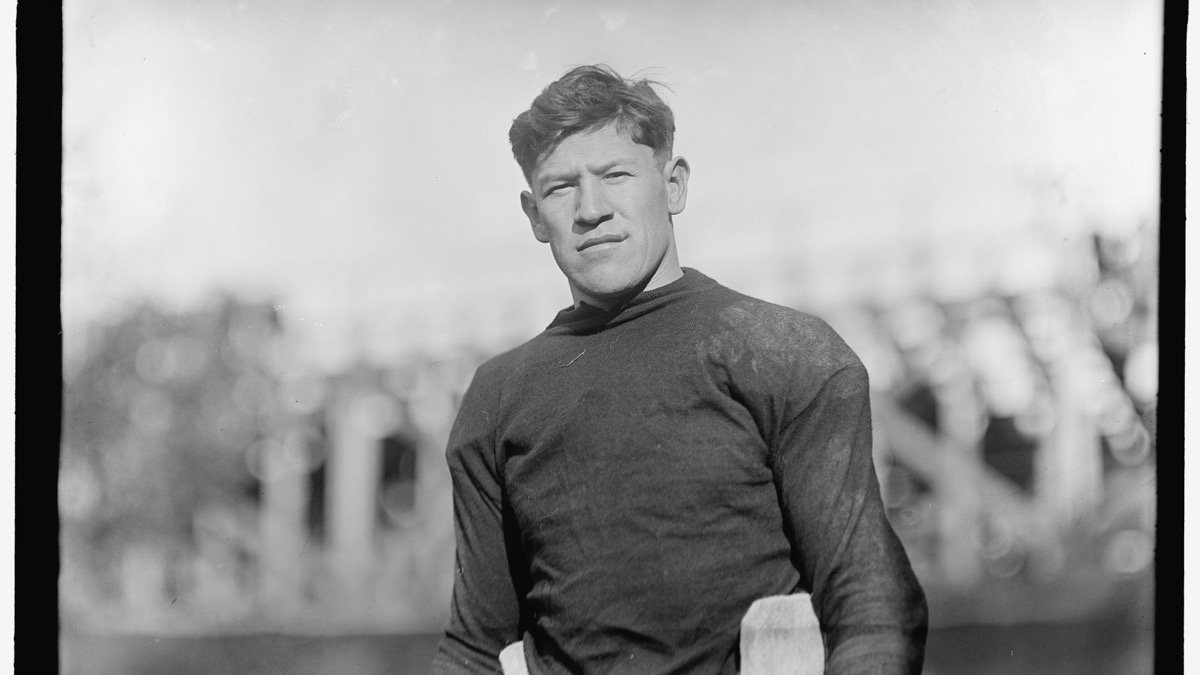
James Francis Thorpe was born in 1887 in Indian Territory, in what later became Oklahoma, a member of the Sac and Fox Nation. His childhood was hard in ways that are easy to list and difficult to imagine: the early death of a twin brother, then of his mother, then of his father, and a string of boarding schools he kept running away from. He arrived at the Carlisle Indian Industrial School in Pennsylvania as a teenager with no particular plan, and found the one place where his body made him famous instead of useful.
Carlisle, and a coach who noticed
The story told at Carlisle is that Thorpe wandered past the track in street clothes, cleared the high jump bar at a height that had beaten the whole team, and walked on. Whether or not it happened quite like that, the effect was the same: Glenn "Pop" Warner, the coach who would spend the rest of his career inventing football formations, had found the most complete athlete he would ever handle.
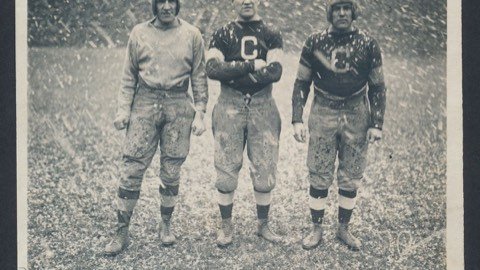
Carlisle was a small school playing the biggest programmes in the country, usually away from home, usually against opponents who outweighed them. It beat them anyway, often, with speed and misdirection and a halfback who could run, kick, pass and tackle. The win over Army in 1912 became the game people still describe, partly for what Thorpe did in it and partly for everything the matchup represented.
Stockholm, and the medals that were taken away
At the 1912 Olympics in Stockholm he won both the pentathlon and the decathlon, two events designed to find the best all-round athlete alive, and won them against specialists. The following year an American newspaper reported that he had been paid small sums to play minor-league baseball during college summers - something many college athletes did quietly under false names, which Thorpe had not bothered to do. Under the amateur rules of the time that was disqualifying, and the medals were taken back.
He never campaigned about it much. Decades after his death the decision was reversed and his status as champion restored, which was the right outcome arriving for an audience that had never seen him compete.
"You, sir, are the greatest athlete in the world."- the words traditionally attributed to King Gustav V of Sweden at the 1912 medal ceremony
A professional, in every sport that would pay
What followed was a working life rather than a career arc. He played major-league baseball, including seasons with the New York Giants. He played professional basketball with a touring team. And from the middle of the 1910s he played football for the Canton Bulldogs in Ohio, in a loose, violent, barely organised professional circuit that drew a few thousand people on a good afternoon.
Canton paid him well because his name on a poster doubled the gate. That is a small commercial detail and also the whole point: professional football in that period had no structure, no fixed schedule and no agreed champion, and the one thing it had to sell was Jim Thorpe.
Thorpe's drop-kicking was considered as valuable as his running. In an era when the ball was rounder and the goalposts sat on the goal line, a halfback who could kick accurately from distance changed what a team could attempt on any down.
President of a league that barely existed
When team owners met in Canton in 1920 to form the American Professional Football Association, they made Thorpe their first president. It was not an administrative appointment in any meaningful sense - he did not run the league, and the organisation he nominally led had no offices and only the vaguest rules. It was a decision about credibility. Putting Thorpe's name at the top of the letterhead told newspapers that the thing was serious.
Two years later the association renamed itself the National Football League. Thorpe kept playing into his late thirties, for Canton and then for a string of other clubs, long past the point where his body could do what his reputation promised.
The years after
His later life was difficult and badly paid. He worked as a labourer, took small parts in films, gave talks, and watched the sport he had helped legitimise grow into something that had no financial room for him in it. He died in 1953, before the Pro Football Hall of Fame existed; when it opened a decade later in Canton, the town where the league had been founded, he was among the charter members.
In 1950 American sportswriters were asked to name the greatest athlete of the half-century just finished, and chose him comfortably ahead of men whose single sports he had only visited. That poll is probably the fairest summary available. Thorpe was not the best football player who ever lived, and the records that define the modern game belong to other people. What he was is the reason there was a professional game at all for those records to be set in.
Why he still matters
Every argument about the modern NFL - its money, its reach, its grip on American Sundays - traces back to a period when the sport had to persuade people it was worth watching. It managed that with barnstorming tours, small-town rivalries, and a handful of names borrowed from college football and the Olympics. Thorpe was the biggest of those names, and he spent it generously on a league that could not have bought it.