
American football is not the most popular sport in the United States because of anything that happens on the field. It is the most popular sport because of a decision taken in the early 1960s about how to sell it, and a long series of adjustments the game made to suit the device people were watching it on.
Through the 1950s professional football was a regional business. Each club sold its own television rights, which meant the New York and Chicago teams earned large sums and the small-market clubs earned very little. Left alone, that arrangement had one obvious endpoint: a handful of rich franchises and a league not worth competing in.
The afternoon that proved the market
The 1958 championship game between the Baltimore Colts and the New York Giants went to sudden-death overtime in front of a national audience that had not been expecting to stay in. The ratings were enormous for the period, and the significance was obvious to everyone watching from a network office: this sport, which had always been treated as a junior partner to baseball and college football, held an audience through unscripted drama better than anything else on television.
Rozelle's idea
Pete Rozelle became commissioner in 1960, a compromise candidate elected after days of deadlock. His central achievement was persuading the owners of the biggest clubs to give up money. The proposal was that the league sell its television rights as one package and divide the proceeds equally among all teams, regardless of market size.
It was a hard sell and it required a change in the law: selling rights collectively looked like an antitrust violation, and a court said so. Congress passed the Sports Broadcasting Act in 1961, carving out an exemption, and the arrangement has underpinned professional football ever since.
The consequence is the single most distinctive thing about the league. A team in Green Bay, a city of around a hundred thousand people, receives the same national broadcast income as a team in New York. Competitive balance in American football is not a happy accident; it is a revenue-sharing agreement.
Every argument about why the NFL is so competitive ends in the same place: the money from the cameras is split evenly, and always has been.- PuroGoal
Monday night, and the invention of the event
In 1970 ABC agreed to show a game in prime time on Monday evenings, which conventional wisdom said would fail against entertainment programming. It did not. Monday Night Football became a fixture of American weeks, with a broadcast style that treated the match as a show - three commentators, one of them deliberately abrasive, graphics, long build-up.
That was the second lesson the league learned. The first was that football sold; the second was that football could be scheduled, packaged and spread across the week rather than confined to Sunday afternoon. Everything from Thursday night games to the drafting of the fixture list around television windows follows from it.
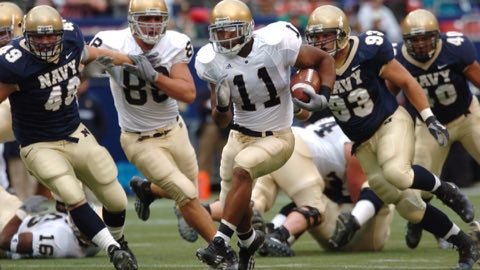
The first instant replay on American television was shown during an Army-Navy game in 1963. The director had to tell viewers over the air that the touchdown had not been scored twice, because nobody had ever seen a play repeated before.
NFL Films, and how the sport learned to look like that
A separate and underrated part of the story is NFL Films, the production company run by Ed Sabol and then his son Steve. They filmed games on high-quality stock, shot in slow motion, put orchestral music under it, miked coaches and players on the sideline, and narrated the whole thing in a voice that sounded like scripture.
The result was that professional football acquired a house style - mythic, weather-beaten, slightly operatic - before most sports had thought about having one. A great deal of how Americans feel about the game is the residue of that film stock.
The game bends to the camera
Television did not only sell football; it reshaped it. The sport's natural stop-start rhythm turned out to be ideal for advertising, and the breaks became formalised. The two-minute warning, originally a timekeeping device from the days before reliable stadium clocks, acquired a commercial function. Officials review decisions on monitors. Games start at times chosen for the west coast audience.
Some of this has a cost. A professional match runs well over three hours and contains a famously small amount of actual play. Fans complain about it every season. The league has trimmed at the edges and will not touch the structure, because the structure is the business.
Where it ended up
The Super Bowl is now routinely the most-watched television broadcast of the year in the United States, by a distance, and the advertising around it is a cultural event in its own right. Streaming services bid for packages that once went to three networks. The money involved would have been unimaginable to the men who agreed to share it in 1961.
What is worth remembering is that none of this was inevitable. Baseball did not do it. College football did not do it for decades and is still arguing about the consequences. One league made an unusual decision about collective selling at exactly the moment the technology arrived, and it has been living off that decision ever since.