
By the time Satchel Paige was allowed to pitch in the major leagues he was in his forties and had already spent two decades as the most famous pitcher in America who was not permitted to play in them. He arrived anyway, and he kept arriving for another seventeen years.
Leroy Robert Paige was born in Mobile, Alabama, around 1906, although he enjoyed the uncertainty too much ever to settle the question. He was sent to a reform school as a boy, learned to pitch there, and emerged into the segregated baseball world of the 1920s with an arm that made grown professionals laugh out loud the first time they saw it.
Barnstorming America
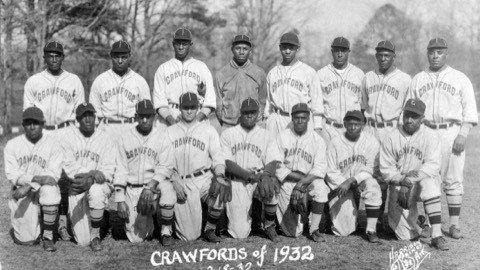
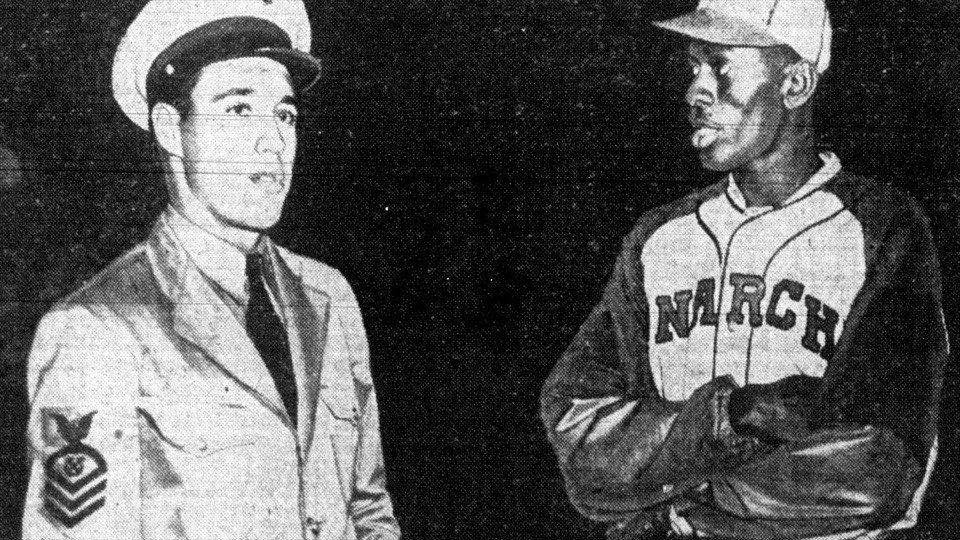
Paige spent his prime years with Negro League clubs including the Pittsburgh Crawfords and the Kansas City Monarchs, but the league schedule was only part of his working life. He pitched almost every day, somewhere, for whoever would pay. He travelled by car across the country to small towns, pitched three innings, collected his share of the gate and drove on.
Crowds came specifically to see him, and he knew it. He would sometimes call his outfielders in to sit down behind the mound and then strike out the side, a piece of showmanship he could afford because it usually worked. Promoters advertised him by name above the teams involved.
The repertoire
Paige threw hard, with pinpoint control, and he gave his pitches names: the bee ball, the trouble ball, the hesitation pitch. The last of these involved a pause in his delivery that broke the hitter's timing so completely that it was eventually ruled illegal in the major leagues, which he took as a compliment.
Control was the foundation of all of it. Teammates described him warming up by throwing over a chewing gum wrapper instead of a plate. When he lost velocity with age he simply relied more heavily on changing speeds, and he remained effective long after his contemporaries had gone into other work.
The games against white major leaguers
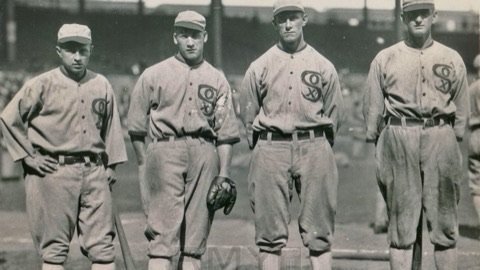
Exhibition games between Negro League stars and major leaguers were common in the off-season, and Paige pitched in many of them. He faced the best hitters in the white leagues and more than held his own, which was precisely why those games made some people uncomfortable.
Players who faced both sides said openly that Paige belonged in the major leagues. Several of the game's biggest names were quoted to that effect while the colour line was still firmly in place, and the statements sat in newspapers for years without producing the slightest change in policy.
"Don't look back. Something might be gaining on you."- Satchel Paige
Arriving late
Jackie Robinson broke the colour line in 1947. The following season the Cleveland club signed Paige, making him the oldest rookie in major league history by a wide margin. The signing was widely dismissed as a publicity stunt by people who had not watched him pitch. He won games immediately and helped the team to a championship.
There was an edge to his arrival. Paige was gracious in public and privately aware that the best years of his arm had been spent in a system that would not have him, and that younger men were now being celebrated for walking through a door he had been knocking on since the 1920s.
The last appearance
In 1965, long retired, Paige was signed by the Kansas City Athletics for a single game. He was in his late fifties. He sat in a rocking chair in the bullpen before the game, went out and pitched three scoreless innings against a major league lineup, and the stadium lights were turned off while the crowd sang to him.
It was a stunt, and everybody involved knew it was a stunt, and he still did not allow a run. The appearance made him the oldest man ever to pitch in a major league game, a record that is unlikely to be seriously challenged.
Cooperstown, eventually
The Hall of Fame had no obvious way to honour players whose careers had taken place outside the major leagues. In 1971 a special committee was created and Paige was its first selection. The initial plan was to place Negro League players in a separate area of the museum, an idea that was abandoned after a public outcry, and his plaque hangs with everyone else's.
In the years since, baseball has gone considerably further. Records from several Negro League seasons have been formally incorporated into the major league statistical record, which has the effect of placing Paige and his contemporaries where they always belonged in the game's official memory.
Nobody has ever established with certainty how many games Paige pitched. Between league play, exhibitions, winter ball in the Caribbean and barnstorming tours, he appeared in thousands of games across more than four decades, most of them never entered in any official record.
The point of the story
Paige is often remembered as a character: the quips, the rocking chair, the invented pitch names. That version is accurate and incomplete. The showmanship was partly a business model, because a Black pitcher in the 1930s could not rely on a league to pay him properly and had to sell tickets himself.
What the arithmetic of his career actually shows is a pitcher good enough to dominate major league hitters at an age when every other pitcher in history had retired. The interesting question is not how he lasted so long. It is what the record book would say if he had been allowed to start on time.