He arrived at a World Cup as a 17-year-old and left it as a legend. Across three decades, Edson Arantes do Nascimento turned a working-class game into an art form — and became the only footballer the whole world agreed to call "The King".
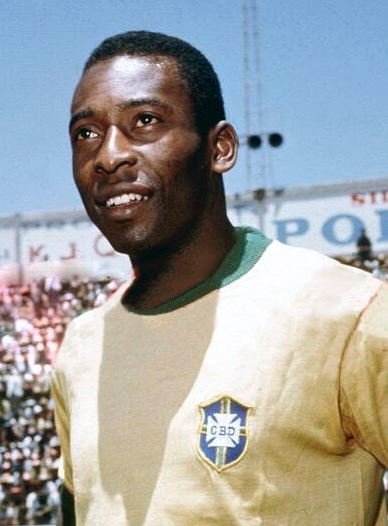
Pelé was born on 23 October 1940 in Três Corações, a small town in the Brazilian state of Minas Gerais. His family had little money; as a boy he shined shoes to earn a few coins and practised with a sock stuffed with newspaper or a grapefruit when no ball was available. The nickname "Pelé" — which he claimed to dislike at first — stuck in school and would one day be known on every continent.
A teenager who conquered the world
He signed for Santos at 15 and made his debut for the Brazil national team at 16. By the 1958 World Cup in Sweden he was 17, and few outside Brazil had heard of him. They soon would. He scored a hat-trick in the semi-final against France and two goals in the final against the hosts, including a sublime flick over a defender. Brazil won its first world title, and a new star had been born in front of a global audience.
Three stars on the shirt
Pelé remains the only player to be part of three World Cup-winning squads. Injury limited his role in 1962, but he returned in 1970 to lead one of the greatest teams ever assembled. That side — with Carlos Alberto, Jairzinho, Gérson, Tostão and Rivelino — played a flowing, joyful football, and Pelé's looping header in the final and his unselfish assist for Carlos Alberto's thunderous goal became symbols of the sport at its most beautiful.
"I was born to play football, just like Beethoven was born to write music."— Pelé
The thousand-goal man
For most of his career Pelé played his club football for Santos, helping turn a modest Brazilian team into a global touring attraction. Goal totals vary depending on which matches are counted, but by his own tally he reached more than a thousand career goals, including friendlies and exhibitions. His symbolic 1,000th goal — a penalty at the Maracanã in November 1969 — stopped the country in its tracks.
In 1975 he joined the New York Cosmos in the United States, helping to popularise the sport in a country that had long resisted it. By the time he retired, "soccer" had a foothold in America that it has never lost.
In 1967, during Nigeria's civil war, a 48-hour ceasefire was reportedly observed so both sides could watch Pelé play an exhibition match in Lagos. Whether legend or fact, the story captures how far his fame reached.
A legacy beyond the numbers
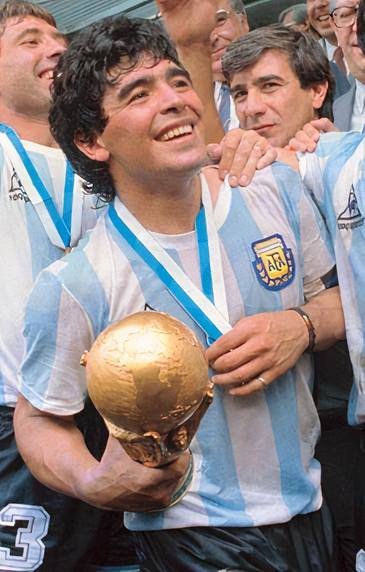
FIFA named him Player of the Century alongside Diego Maradona, and his influence stretched far past the pitch. He became a global ambassador for the sport, a household name in places where football was barely played, and a model of grace under the weight of impossible expectations. When he died on 29 December 2022, tributes poured in from heads of state, rival legends and ordinary fans alike.
Styles change and records fall, but Pelé's place is secure. He was the first truly global superstar of the game — the player who showed the world what football could be, and who wore the crown so naturally that no one thought to question it.