Few numbers in football are as celebrated — or as fiercely argued over — as goalscoring records. Tallies shift depending on which matches you count, how old records were kept, and whose archive you trust. Here is a tour of the most famous marks, and why almost none of them is truly final.
Goalscoring is the part of the game everyone remembers, so it is fitting that its records are the most studied and the most disputed. Before diving in, one honest caveat: record-keeping in football has never been uniform. Friendlies, exhibition tours, wartime matches and youth fixtures have all been counted by some sources and ignored by others. Treat every "most ever" below as the best estimate of a careful sport, not a sealed verdict.
Most goals in a single calendar year
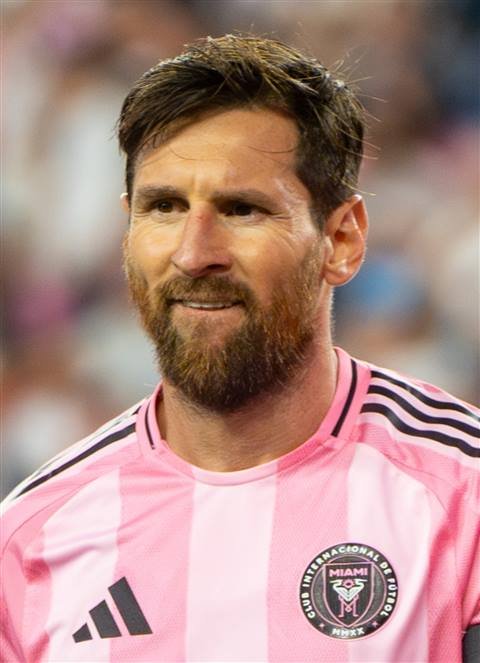
The most widely recognised modern record belongs to Lionel Messi, who scored 91 goals in 2012 across club and country. It is a staggering figure, achieved in an era of detailed, well-audited statistics, which is part of why it is so often cited. Older claims do exist — admirers of Pelé and of Germany's Gerd Müller have argued for even higher single-year totals — but those rely on counting methods and match lists that differ from the modern standard. Messi's 91 is the number most authorities point to, while acknowledging the debate behind it.
Most career goals
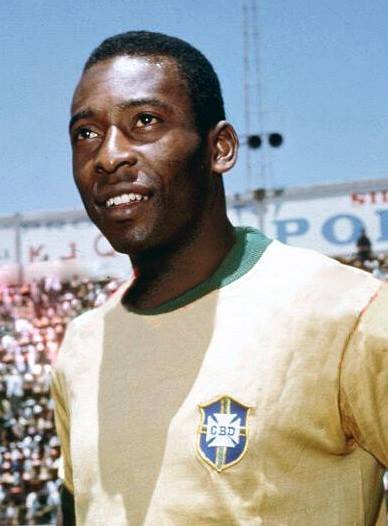
This is where football's record-keeping gets genuinely tangled. Pelé himself claimed more than 1,000 career goals, a figure that includes friendlies and exhibition matches alongside competitive games. The Austrian-Czech striker Josef Bican, who played mostly in the 1930s and 1940s, is often credited with one of the highest official tallies in history, though his totals too depend on which sources you accept. In the modern game, Cristiano Ronaldo has scored more than 850 goals in official matches — among the most ever recorded in official competition.
The key, again, is what counts as a "goal" for the record. Include friendlies and the leaders look different than if you restrict the list to official, competitive fixtures. There is no single agreed answer, which is exactly why the "most career goals" title is one of the sport's longest-running arguments.
Because no global body certified club goals for most of the twentieth century, historians have reconstructed totals for players like Bican from newspapers and league records. That painstaking detective work is why his tally is often described as "one of the highest on record" rather than as a single fixed number.
Most international goals
At national-team level the men's record belongs to Cristiano Ronaldo, who has scored more than 100 goals for Portugal — a tally without precedent in the men's game. Internationals are generally well documented, so this mark is on firmer ground than club totals, though the exact figure keeps climbing for as long as he keeps playing. Phrasing it as "more than 100" is the safe way to state it: any fixed number risks being out of date by the next international window.
World Cup records
The World Cup holds two of the game's most enduring scoring marks. Just Fontaine of France scored 13 goals at the 1958 tournament in Sweden — a single-edition haul that has never been matched, and looks unlikely to be in an age of tighter defences and fewer one-sided games. Across all World Cup finals tournaments combined, the all-time leading scorer is Miroslav Klose of Germany with 16, accumulated patiently over four tournaments from 2002 to 2014. One is a sprint, the other a marathon, and both have stood for years.
Single-match hauls and the problem of old records
Beyond season and career totals sit the wild one-off performances — players reported to have scored five, six or more goals in a single match. Many of these come from lopsided fixtures, lower divisions or matches played long ago, and verifying them is hard. Box scores were not always recorded carefully, local reports sometimes disagreed, and a "goal" credited in one account vanishes in another. The further back you go, the more a record rests on trust in fragmentary evidence.
That is the honest thread running through all of it. Football's greatest scoring records are real achievements, but they live inside an inconsistent history. The smartest way to enjoy them is to celebrate the feats while remembering that the exact numbers — 91, 1,000-plus, 850, 13, 16 — each carry an asterisk made of context. The debates are not a flaw in the record books; they are part of what makes the chase so compelling.