
For its first thirty years American football was a game of mass and leverage, played in a space the width of a few bodies. It was also killing people. The reform that followed was meant to make the sport survivable; what it actually did was invent a different sport.
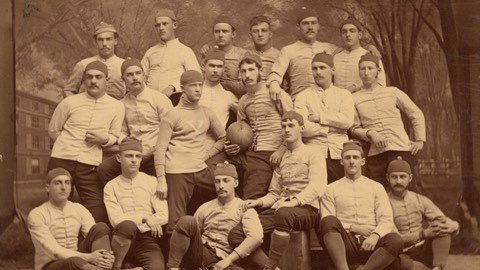
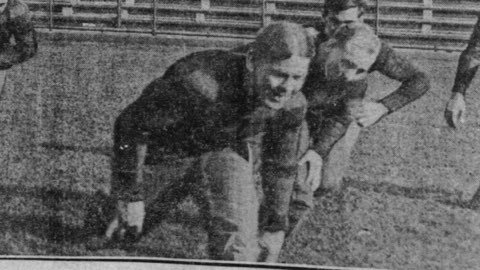
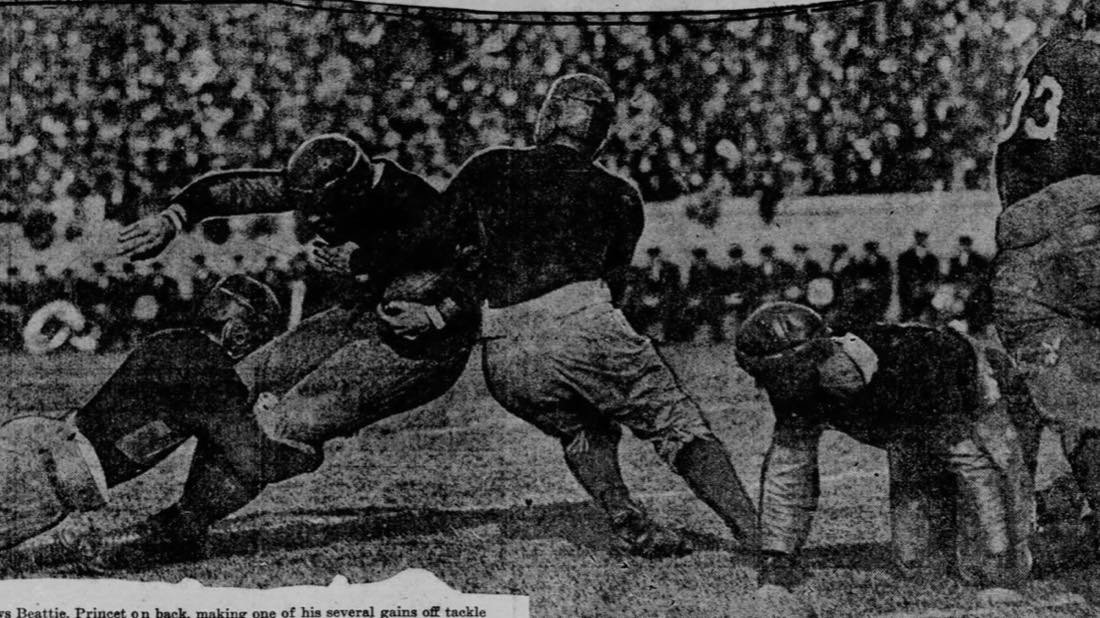
To understand why the forward pass mattered, you have to picture the game without it. Possession was secure, the field effectively narrow, and the only way forward was through. Teams built formations designed to concentrate weight - players locked together, moving as one unit into the opposing line, sometimes with the runner dragged along or thrown. The flying wedge and its relatives were legal, logical and horrific.
The crisis
By the early 1900s the injury lists had stopped being a sporting matter and become a public one. Newspapers ran tallies of deaths and serious injuries across college and school football each season. Some universities abolished the sport. Others were preparing to.
In 1905 President Theodore Roosevelt - a supporter of the game, with a son playing it - called representatives of the leading colleges to the White House and told them plainly to reform football or watch it be legislated away. That winter the colleges formed a new body to govern the rules, which became the organisation known today as the NCAA.
A rule nobody knew how to use
The reform package of 1906 did several things at once: it outlawed the worst of the mass formations, lengthened the distance required for a new set of downs, established a neutral zone at the line of scrimmage, and legalised throwing the ball forward.
The last of these came wrapped in restrictions that look absurd now. A pass had to cross the line a certain distance away from the centre. An incomplete pass could cost the throwing team possession or a penalty. The ball itself was fat and round, designed for kicking and carrying, and awkward to grip. Most coaches concluded that the risk was not worth it and carried on running.
A rule legalising something is not the same as a rule teaching anyone to use it. The forward pass needed twenty years and a shrinking football before it became the obvious choice.- PuroGoal
The teams that read it differently
A small number of coaches saw immediately what the rule was worth. Eddie Cochems at St. Louis University is usually credited with the first serious passing attack, in 1906, built around a thrower who could put the ball in the air with an overhand spiral rather than lobbing it.
The game that made the point to everyone else came in 1913, when Notre Dame - then a small, barely-known school - travelled to play Army at West Point and won by throwing. Gus Dorais threw, Knute Rockne caught, and they had spent the summer practising it on a beach. Army had prepared for a running team. The result was reported nationally, and the argument about whether passing was a gimmick quietly ended.
The ball changed shape to suit the pass. The early football was close to a rugby ball; over the following decades it was made narrower and more pointed, which made it easier to grip and throw and harder to drop-kick. The drop-kick, once a standard scoring weapon, almost vanished as a direct result.
What the pass did to the field
The deepest change was geometric. A running game can be defended by crowding the ball; a passing game cannot, because the ball can be delivered fifty yards away in two seconds. Defences had to spread out. Once they spread out, running lanes opened. Once running lanes opened, running backs mattered again, which forced defences to balance - and that tension between stopping the run and covering the pass is still the central problem of defensive football.
It also created positions. Wide receivers exist because of the pass. So do cornerbacks and safeties, pass-rushing specialists, and the entire idea of a quarterback as the most important player on the field rather than simply the man who starts the play.
The restrictions come off
Through the 1920s and 1930s the penalties for incomplete passes were removed, the restrictions on where a pass could be thrown from were relaxed, and professional teams - who needed to sell tickets and found that passing sold them - pushed harder than the colleges did. The professional game rewrote its rules repeatedly in favour of the offence, and has never really stopped.
The result is a sport in which the throw is the default and the run is the variation, almost the exact reverse of the game Roosevelt was asked to save.
The uncomfortable part
The reform was a safety measure, and it worked in its own terms: the mass plays that were killing players were removed, and the game opened up. But football remains a collision sport, and the modern version produces its own pattern of injury - faster players over more open ground, and a long argument about head trauma that the sport is still having.
The lesson of 1906 is not that football solved its safety problem. It is that the sport has always changed its rules under outside pressure, and that the changes made under that pressure are the ones that defined it. The forward pass was not a stroke of imagination. It was a concession, and it became the whole game.