Basketball did not grow out of an old folk game or evolve over centuries. It was invented on purpose, in a single afternoon, by one man trying to solve a very ordinary problem: how to keep a room full of restless students busy through a long New England winter.
In December 1891, a Canadian physical education instructor named Dr. James Naismith was working at the International YMCA Training School in Springfield, Massachusetts. The weather had turned bitter, the days were short, and a class of young men was stuck indoors with nothing to burn off their energy. Naismith's supervisor handed him a tricky assignment: invent a new indoor game, something active but not as rough as football, and do it in about two weeks.
A problem to solve indoors
Naismith thought carefully about what made games fun and what made them dangerous. He wanted plenty of movement, but he wanted to take the hard tackling out of it. His key idea was to raise the goal above the players' heads. If the target was up high and you had to drop the ball into it, brute force would not help — players would need skill and accuracy instead of a charging run. That single decision shaped almost everything about the sport that followed.
Peach baskets and a soccer ball
Looking for something to serve as a goal, Naismith asked the school janitor for a couple of boxes. None were available, so he was handed two peach baskets instead. He nailed them to the lower rail of the running track that circled the gymnasium — a balcony that happened to sit about ten feet off the floor. That height was an accident of the building, not a careful calculation, yet it became the standard that the game still uses today.
For a ball, he used a soccer ball, since no purpose-built basketball existed yet. There was one detail that seems strange now: the peach baskets had solid bottoms. Every time someone scored, the ball stayed in the basket and a player had to climb up or use a pole to fish it out before play could continue. It would be a while before someone thought to cut the bottoms out so the ball could simply fall through.
"I had a game that required skill and self-control, played without extreme roughness."— James Naismith
Thirteen rules on two pages
Before that first match, Naismith wrote out thirteen rules and pinned them to the gymnasium wall. Several of those rules still echo in the modern game. Players could not run with the ball; they had to throw it from the spot where they caught it. There was no dribbling at all in the original version — the bounce-and-go move that defines the sport today was added by later players, not by Naismith. Pushing, tripping and striking opponents were forbidden, keeping the contact gentle on purpose.
The very first game, played with two teams of nine, is said to have ended with a single basket scored. The lone goal was reportedly thrown from well out on the floor, and players spent much of the match learning what they were and were not allowed to do. By the standards of the leagues it would inspire, it was a slow, low-scoring affair — yet everyone who took part understood that they had played something genuinely new. It was a modest beginning for something that would soon spread across the world.
Naismith reportedly wanted to name the game "Box Ball." A student suggested calling it "Naismith Ball," which he disliked, and the simpler "basket ball" stuck instead. The two words were joined into one over the following decades.
From one gym to the whole world
What gave basketball its remarkable head start was the network it was born into. The YMCA had training schools and gyms across the United States and beyond, and graduates carried the new game with them wherever they went. Within just a few years it had reached other countries, and a sport invented to fill a few winter afternoons was being played on courts far from Springfield.
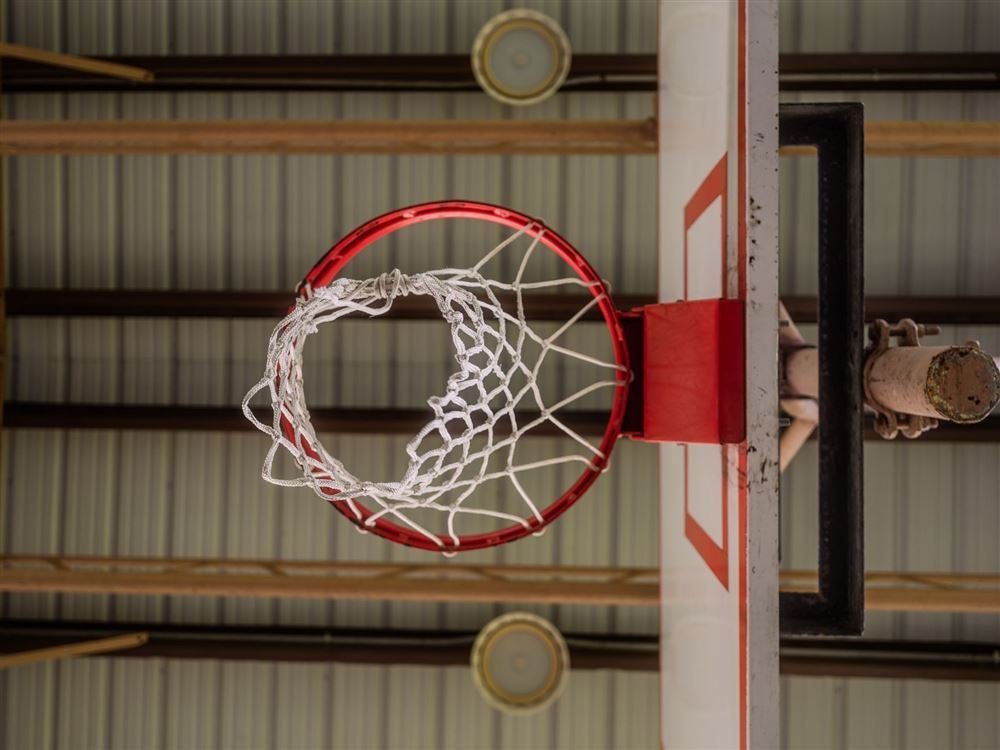
From there the changes came quickly. Open hoops with nets replaced the peach baskets, the dedicated basketball replaced the soccer ball, dribbling was allowed, and team sizes shrank to five a side. Professional leagues followed, and basketball eventually became one of the most watched sports on the planet. Yet for all that growth, the core that Naismith sketched out in 1891 — a raised goal, a ball moved by passing and skill, and a deliberate ban on rough play — is still the game we recognise today.