Basketball was invented in a gymnasium with a peach basket and a soccer ball, and it has been gathering odd little stories ever since. Some of the sport's most familiar features began as quirky fixes to very practical problems.
Few sports have a clearer birth story than basketball. It was devised in December 1891 by James Naismith, a physical-education instructor in Springfield, Massachusetts, who needed an indoor game to keep his students active through a cold New England winter. He nailed up two baskets, wrote down a short list of rules, and a game that would spread to nearly every country on Earth was born almost overnight. The details of those early days are where the curiosities begin.
Peach baskets and the missing hole
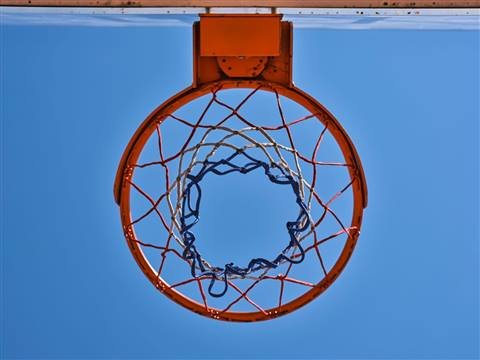
The very first hoops were exactly what the name suggests — peach baskets fastened to a balcony railing. The catch is that the baskets still had their bottoms in place. Every time a player scored, the ball stayed put, and someone had to climb a ladder or use a long pole to fish it out before play could continue. Cutting a hole in the bottom of the basket, and later replacing it with an open metal rim and net, was one of the game's first great improvements. The balcony, as the story goes, also explains why the rim sits roughly ten feet off the floor.
Why the ball turned orange
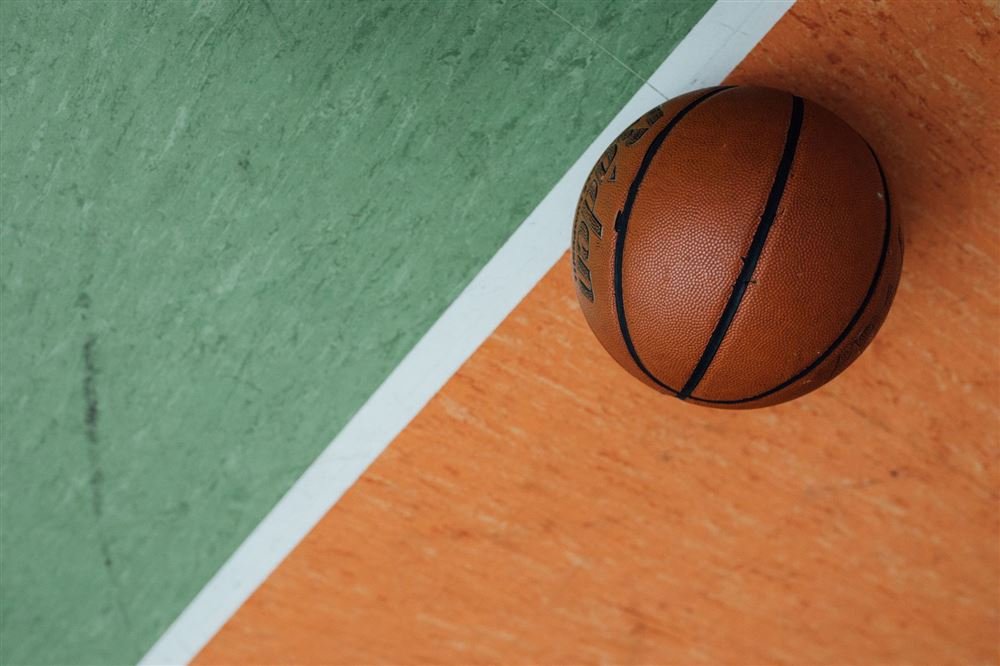
For its first decades the basketball was a dark brown leather ball, much like an early soccer ball. The problem was visibility — under the lights and against a busy background, the brown ball could be hard to follow for players and spectators alike. Around the 1950s a brighter orange ball was introduced, and the change is widely credited to Tony Hinkle, a long-serving coach at Butler University, who worked with a sporting-goods maker to find a colour that stood out more clearly. The orange ball caught on quickly and became the look the sport is known for today.
"The invention of basketball was not an accident. It was developed to meet a need."— James Naismith
The tallest and the shortest
Basketball rewards height, but the range of bodies that have thrived in it is part of its charm. At the very top, a few players have stood around 7 feet 7 inches tall — among them Manute Bol, born in what is now South Sudan, and Gheorghe Muresan of Romania, often listed as the tallest players in NBA history. At the other extreme, Muggsy Bogues played in the league at a listed 5 feet 3 inches, and he was no novelty act: he carved out a long career as a quick, clever point guard who could steal the ball from much taller opponents.
That contrast — giants and small, darting guards sharing the same court — is something few other major sports can match, and it is a big part of why the game looks the way it does.
Before the shot clock, teams that were ahead could simply hold the ball and refuse to attack. One professional game in 1950 reportedly ended with a final score in the teens, as one side stalled to protect a narrow lead — the kind of result that helped convince the league something had to change.
The clock that saved the game
By the early 1950s professional basketball had a serious problem: a leading team could stall almost indefinitely, freezing the ball and dragging scores down to a crawl. The fix was the 24-second shot clock, introduced for the 1954–55 season after being championed by Danny Biasone, owner of the Syracuse Nationals. The rule forced a team to attempt a shot within 24 seconds of gaining possession, and the effect was immediate — scoring rose, the pace quickened, and crowds came back. It is often called the single most important rule change in the sport's history.
Here are a few more small surprises worth keeping in mind:
- Naismith's original list of rules was just thirteen items long, and a copy of it has since sold at auction for a remarkable sum.
- Dribbling as we know it was not in those first rules — early players mostly passed, and the bouncing dribble developed gradually.
- The three-point line, now central to modern strategy, is a relatively late arrival, added to the NBA only for the 1979–80 season.
Taken together, these stories show a sport that has always been willing to tinker with itself. From cutting the bottom out of a peach basket to brightening the ball and adding a clock, basketball's history is a long series of small, smart fixes — each one nudging the game closer to the fast, high-scoring spectacle that fills arenas around the world.