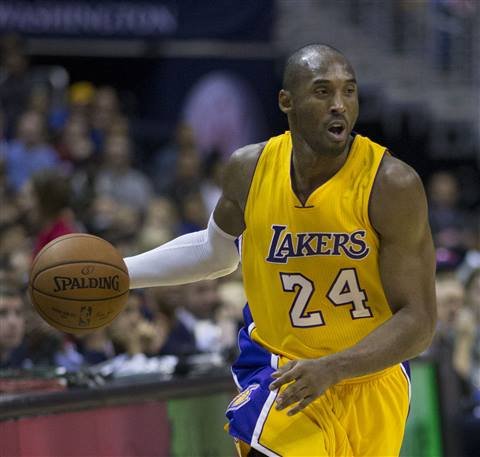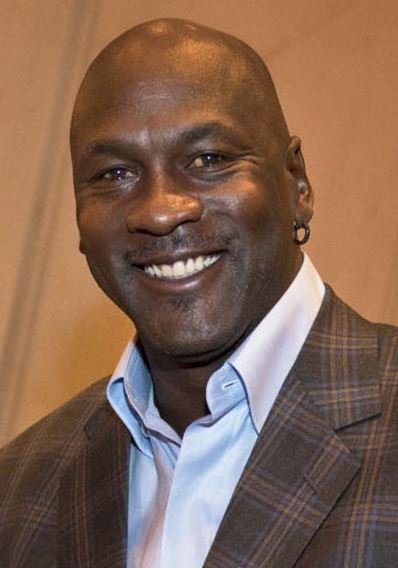
He turned a basketball court into a stage and a game into a global obsession. Across two title-winning runs with the Chicago Bulls, Michael Jordan became the standard every player since has been measured against — and the man many simply call the greatest of all time.
Michael Jeffrey Jordan was born on 17 February 1963 in Brooklyn, New York, and grew up in Wilmington, North Carolina. The most famous story of his youth is that he was left off his high-school varsity team as a sophomore — a snub he later said he used as fuel, picturing that disappointment whenever his drive wavered. The tale is often softened in the retelling: he was a slightly undersized teenager kept on the junior varsity, not the failure the legend suggests. But the way Jordan carried it tells you everything. Few athletes have ever been as relentlessly competitive, and he spent a career manufacturing slights to feed that fire.
From Carolina to the Bulls
At the University of North Carolina, Jordan announced himself on the biggest stage as a freshman, hitting the title-winning jump shot in the 1982 NCAA championship game against Georgetown. That shot, sunk with seconds to play, was the first national glimpse of a player who seemed to grow calmer as the pressure rose. Two years later the Chicago Bulls selected him with the third overall pick in the 1984 draft, behind Hakeem Olajuwon and Sam Bowie — a decision that would haunt the teams who passed on him. He won Rookie of the Year and quickly turned a struggling franchise into appointment viewing, lifting attendances and television ratings almost everywhere the Bulls travelled.
Six rings and a dynasty
Jordan's individual brilliance came first; the championships followed. He collected around ten scoring titles and was named Defensive Player of the Year in 1988, the same year he was crowned league MVP — a rare double that underlined how complete his game was at both ends of the floor. He finished his career with five MVP awards in all. For years, though, the rings would not come; powerhouse Detroit teams blocked his path before the Bulls finally broke through.
When they did, they did not stop. With Scottie Pippen alongside him and Phil Jackson on the bench running the triangle offense, the Bulls captured two three-peats — titles in 1991, 1992 and 1993, then again in 1996, 1997 and 1998 — with Jordan named Finals MVP in all six. The 1996 team won more than seventy regular-season games, one of the best single seasons any club has ever produced. By most counts he averaged more than thirty points per game across his career, among the best marks the league has ever seen.
"I've missed more than 9,000 shots in my career. I've lost almost 300 games. I've failed over and over and over again in my life. And that is why I succeed."— Michael Jordan
The moments that became legend
Greatness is remembered in scenes, and Jordan supplied an album of them. There was "The Shrug" in the 1992 Finals, when he turned to the broadcast table almost apologetically after a barrage of three-pointers. There was the 1997 "Flu Game," when, visibly ill, he dragged the Bulls to a pivotal Finals win and collapsed into Pippen's arms. And there was "The Last Shot" in 1998 — a crossover, a pull-up jumper over Utah's defense, and a sixth ring frozen in time as the perfect ending.
Jordan retired more than once. After his father's death he stepped away in 1993 to play minor-league baseball in 1994, chasing a childhood dream, before returning to basketball with the famous two-word press release: "I'm back." He would win three more titles after that comeback.
A legacy beyond the game
Jordan's influence stretched far past the box score. The Air Jordan line, launched with Nike in the mid-1980s, grew into one of the most valuable brands in sport and reshaped how athletes built businesses around their names. He helped carry basketball to a worldwide audience, and a generation of players grew up imitating his fadeaway, his tongue-out drives and his refusal to lose.
Records will keep falling and new contenders will keep arriving, but the debate almost always circles back to one name. Michael Jordan did not just win — he set the template for what dominance, style and competitive fire could look like, and in doing so he became the measuring stick the sport still uses today.