
Three of the four majors have been the most important tournament in their country since they were founded. The fourth spent decades being politely skipped by the best players in the world, and had to rebuild itself almost entirely in order to be taken seriously.
The tournament began in 1905 as the Australasian Championships, and for most of its first century its problem was geography. Getting there from Europe or the United States meant weeks at sea, and later an extremely long flight, for a tournament whose prize money did not come close to covering the trip.
The wrong date
The scheduling was the second difficulty. For long stretches the championship was played in a part of the calendar that suited nobody - at times close to the end of December, when players wanted to be at home - and the gap between it and the rest of the season made it easy to leave out of a year's plans.
The venue also moved from city to city in the early decades, which meant the event never built a permanent crowd or a home. Some years the draw was thin enough that reaching the later rounds required beating very few players of international standing.
Kooyong and grass
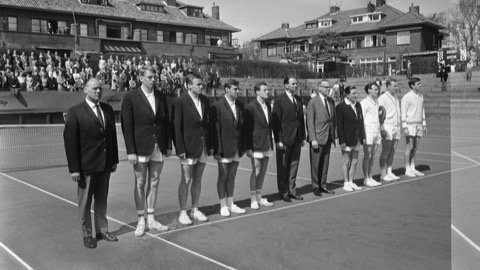
By the second half of the century the tournament had settled at Kooyong in Melbourne, on grass, and the Australian players of the era were good enough that winning it meant something regardless of who had travelled. But the facilities were those of a private club, the capacity was limited, and the heat in an Australian summer was punishing for players and spectators alike.
Something had to change, and what the organisers decided to change was almost everything.
The move that fixed it
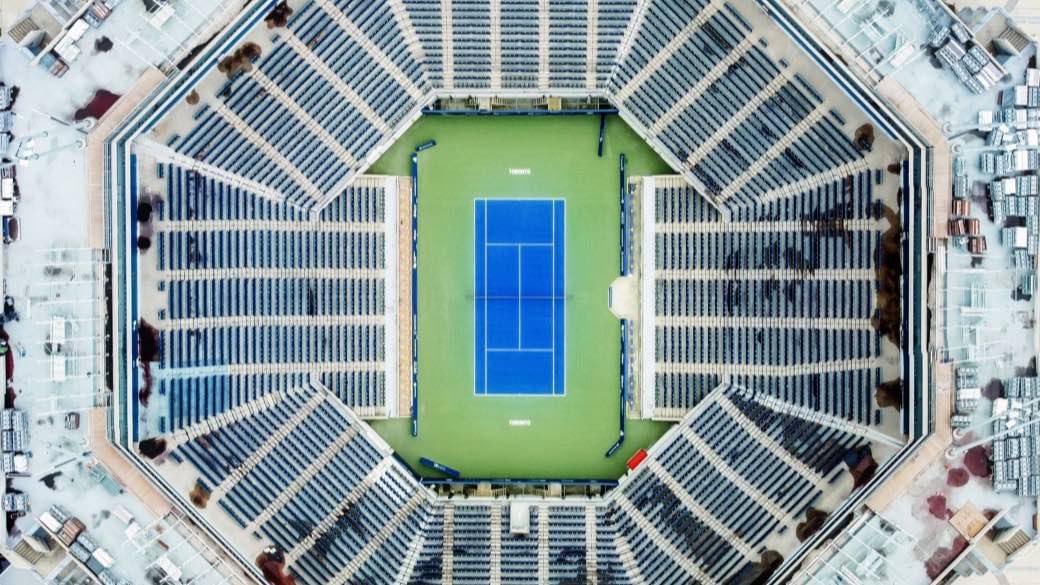
In 1988 the tournament moved to a purpose-built site on the edge of the city centre, abandoned grass for hard courts, and installed a retractable roof on the main stadium - the first of the majors to have one. The combination addressed every complaint at once: capacity, surface consistency, and the weather.
It also settled into a fixed position in January, at the start of the season rather than the end of it, which turned the long trip into the beginning of a campaign instead of an afterthought.
The fix was not marketing. It was a new site, a new surface and a roof that meant the schedule held.
Heat
The one problem the move could not entirely solve is the climate. Court temperatures in an Australian January can reach levels at which playing five sets is a medical question rather than a sporting one, and the tournament has developed a formal policy that can suspend play on outside courts and close the roofs on the show courts.
The policy has been revised repeatedly, usually after a day that produced images nobody wanted, and it now uses a measure combining air temperature, humidity and radiant heat rather than a single thermometer reading.
Because of a change in the tournament's scheduling, there was a calendar year in which the championship was not held at all, as the event shifted from the end of one year to the start of the next.
What it is now
The tournament markets itself around the atmosphere rather than the history, with evening sessions, music, and a site laid out like a festival. The attendance figures are among the highest in tennis, and players routinely describe the facilities as the best on the circuit.
It is a genuinely unusual sporting story: a major championship that was, for most of its existence, the one everybody missed, and which fixed the problem by building its way out of it.
The local generation
There is an irony in the tournament's long unpopularity, which is that for a stretch of the twentieth century Australia produced more outstanding players than anywhere else. The national championship was, in those years, one of the hardest titles in tennis to win, simply because of who was in the draw.
That generation faded, and the tournament spent decades without a home champion in the men's singles while it was being rebuilt into a world-class event. The crowds came anyway, which told the organisers something useful about what they were actually selling.
Night tennis
One of the quieter innovations was the evening session. Playing the biggest matches after dark solved the heat problem, filled the stadium with people who had finished work, and produced a particular kind of atmosphere - cooler air, slower conditions, a noisier crowd - that players either love or complain about.
The conditions genuinely change. A ball travels differently in cool, heavy night air than in the middle of a hot afternoon, and the court plays slower. A draw can therefore hand two players very different tournaments depending on when they are scheduled, which is a complaint heard every January and is unlikely ever to be resolved.
The trip itself
It is easy to underestimate how much the journey shaped the tournament's reputation. For decades a European player heading to the championship faced days of travel each way for an event at the far end of the calendar, with no realistic way to play the warm-up tournaments that prepare a body for a major.
Air travel shortened the trip but did not remove the problem, because arriving in Australia means crossing enough time zones to lose several days to adjustment. The modern solution is a cluster of lead-in tournaments across the region in the first two weeks of January, which gives players a reason to arrive early and matches to play once they do. That cluster, more than any single decision, is what turned the championship from an isolated event into the natural start of the season.