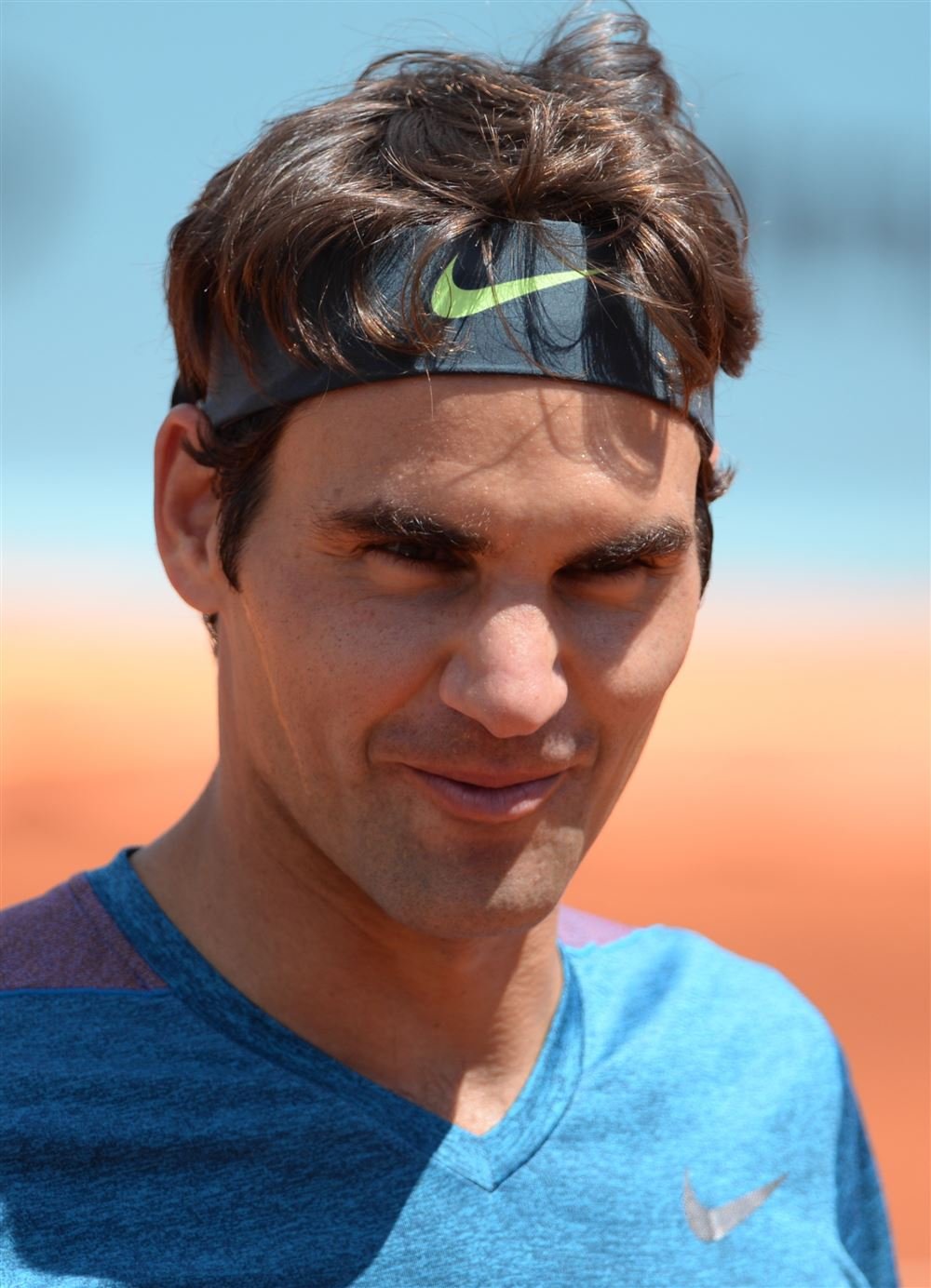
He played tennis as if it cost him nothing — gliding across the court, painting lines with a one-handed backhand that looked drawn rather than struck. For nearly two decades, Roger Federer made the hardest game in sport look like the most graceful.
Roger Federer was born on 8 August 1981 in Basel, Switzerland, the son of a Swiss father and a South African mother. As a junior he was a hot-tempered talent, smashing rackets and arguing with himself between points. The discipline came later, and with it a calm that would become his trademark. By the time he was done, the angry teenager from Basel had reshaped what excellence in tennis looked like.
The breakthrough and the rise
The turning point came at Wimbledon in 2001, when a 19-year-old Federer ended Pete Sampras's long reign on Centre Court in a five-set thriller. Two years later he won the first of his major titles at the same tournament. From there the floodgates opened. He reached number one in the world for the first time in early 2004 and began a period of dominance that few sports have ever seen, stringing together finals and semi-finals with almost monotonous consistency.
A game built on grace
What set Federer apart was not only what he won but how he won it. His footwork was so quiet that he seemed to drift to the ball, and his one-handed backhand — an increasingly rare shot in the modern power game — became one of the most admired strokes in the sport's history. He moved without apparent effort, hit without apparent strain, and rarely let frustration show. Spectators who knew nothing about tennis could still sense they were watching something beautiful.
That style was no accident. Federer married an old-fashioned attacking instinct — the urge to come forward, to take the ball early, to end points cleanly — with a forehand that could be struck from almost any position. He was equally at home on the fast grass of Wimbledon and the hard courts of the Australian and US Opens, and he reached the final of the French Open on clay as well, eventually completing the career Grand Slam. Versatility on every surface, sustained across many years, is among the rarest achievements in the game.
He captured around 20 Grand Slam singles titles over his career, including a record eight at Wimbledon, the tournament most associated with his elegant style. He held the world number one ranking for a total of 310 weeks, among them a record 237 consecutive weeks — a streak that underlined just how relentless his peak years were.
"I fear no one, but respect everyone."— Roger Federer
The rivalries that defined an era
No champion exists in isolation, and Federer's greatness was sharpened by two extraordinary rivals. Against Rafael Nadal he met a left-handed force of nature whose topspin troubled even Federer's defences, especially on clay; their meetings produced some of the most celebrated matches ever played, including a Wimbledon final widely regarded as the finest in the tournament's history. Against Novak Djokovic he faced a relentless returner and competitor who pushed him in countless tight finals.
Rather than diminishing him, those rivalries elevated all three men. The so-called "Big Three" raised the standard of the sport for the better part of two decades, and Federer's willingness to lose graciously to opponents he clearly admired only deepened his standing with the public.
Federer was voted the winner of the ATP Fans' Favourite award many years in a row — a run so long that it became almost a running joke. His sportsmanship and reputation for fair play earned him the tour's Sportsmanship Award on numerous occasions as well.
A farewell like no other
By his final seasons, injuries had begun to take their toll, and Federer accepted the slow goodbye with the same composure he brought to everything else. In 2022 he stepped away from the sport at the Laver Cup, a team event he had helped to create. For his last match he chose to play doubles alongside Rafael Nadal — the rival turned friend — and the sight of the two champions seated together in tears moved the tennis world far beyond the result on the scoreboard.
Records will be chased and surpassed, as they always are. But Federer's legacy was never only about the totals. He gave the sport a sense of beauty, a model of dignity in victory and defeat, and a standard of grace that future players will be measured against. Through his foundation he also poured time and money into education for children in southern Africa, extending his influence well beyond the baseline.
Ask players who came after him what they remember, and the answer is rarely a single match. It is the way he carried himself — the calm, the economy of movement, the refusal to let either triumph or defeat distort him. He did not just win tennis matches. He made the game look like an art form, and in doing so he set the bar by which elegance in sport is still measured.