A nation gathered to crown itself. Nearly two hundred thousand people filled a brand-new stadium expecting a coronation, and instead watched a small visiting team write one of football's most famous tragedies. On 16 July 1950, the noise of Brazil simply stopped.
The 1950 World Cup was the first since the Second World War, and Brazil set out to host a tournament that would announce the country to the world. At its centre stood a colossus of concrete and ambition: the Maracanã, a new stadium built in Rio de Janeiro on a scale the game had never seen. The plan was simple and irresistible — Brazil would win at home, and the new arena would be its monument.
A final that was not a final
Unusually, the 1950 tournament was not decided by a single championship match. Instead, the four group winners played a final round-robin pool, and the title would go to whoever topped the table. By coincidence, the schedule delivered something that felt exactly like a final: the last game of the pool brought together the two leading teams, Brazil and Uruguay, at the Maracanã. Brazil's superior record meant a draw would be enough. Uruguay needed to win outright.
Confidence in Brazil had swelled into certainty. Newspapers printed celebratory editions in advance, a victory song was already prepared, and officials spoke of the champions before a ball had been kicked. The match was treated less as a contest than as a formality on the way to the party.
Friaça scores, and a country exhales too soon
The official attendance was recorded at around 173,850, with many estimates putting the true number closer to 200,000 — still among the largest crowds in the history of the sport. Early in the second half the script appeared to be holding: the forward Friaça struck to put Brazil ahead. The roar that followed seemed to settle the matter. One goal, and the title was within touching distance.
"Outsiders are not allowed in the Maracanã."— Obdulio Varela, Uruguay's captain
Uruguay's captain, Obdulio Varela, refused to let his team be swept away. He gathered the ball, argued, slowed the game and dragged his side back into the match by sheer force of will. The certainty in the stands began, slowly, to curdle into doubt.
Schiaffino, Ghiggia and the silence
Then Uruguay struck. Juan Alberto Schiaffino equalised, and the enormous crowd grew uneasy. With the clock running down, Alcides Ghiggia advanced down the right and drove the ball past goalkeeper Moacir Barbosa to make it 2-1. Uruguay, against every expectation, were world champions.
What happened next became as famous as the goal itself. The Maracanã fell into a stunned, total silence — tens of thousands of people united in disbelief, unable to make a sound. Ghiggia would later say that only three people had ever silenced the Maracanã: the Pope, Frank Sinatra, and himself.
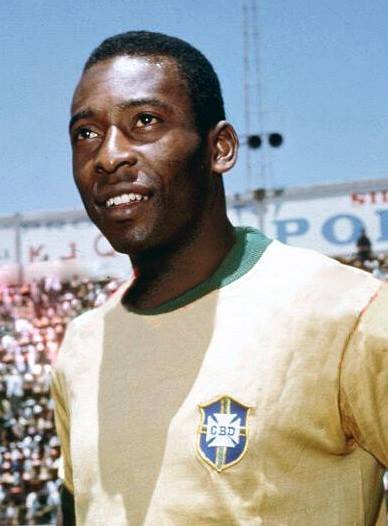
The defeat pushed Brazil to abandon the white kit it had worn that day. A few years later a new design was chosen — and the now-iconic yellow shirt, with green and blue, was born out of the desire to leave 1950 behind.
The wound that lasted a generation
The result reached far beyond the scoreline. The defeat was experienced as a national trauma, and players were blamed for it long after the noise of the day had faded. Goalkeeper Moacir Barbosa, in particular, was unfairly held responsible for the rest of his life, haunted by a single moment despite a long and accomplished career. Decades later he reflected that in Brazil the maximum sentence was thirty years, yet he had been punished for far longer for a crime he did not commit.
The afternoon even gave the language a new word. "Maracanazo" came to mean a shocking home defeat — a favourite brought low on its own ground in front of its own people. It is a term still reached for whenever the unthinkable happens to a host.
More than seven decades on, the Maracanazo endures as a parable about hubris and the crushing weight of expectation. Brazil would go on to win the World Cup more times than any other nation, and the yellow shirt would become the most recognisable in the game. But that triumph was built, in part, on the silence of 1950 — the day a coronation became a wake, and a football culture was reshaped in a single, unbearable afternoon.