
The name is not a word. It is a contraction of a Russian phrase meaning self-defence without weapons, and it describes exactly what the system was built to be: a practical curriculum, assembled deliberately in the early Soviet Union from whatever happened to work.
Sambo was put together rather than handed down. In the 1920s and 1930s, instructors working with Soviet police and military were told to produce an effective unarmed system, and they did it the way an engineer would: by collecting techniques from many sources and keeping the ones that survived testing.
Two men and two approaches
The usual account credits two figures working largely separately. One had studied judo in Japan and brought the Kodokan's throwing and groundwork curriculum back with him. The other came from a background in older European wrestling and self-defence and was less interested in sport than in what a police officer could use.
A third name, a student of the first, is often given credit for the synthesis and for the system's later promotion as a sport. The exact division of authorship is disputed by historians, but the pattern is clear enough: a Japanese skeleton with regional wrestling grafted onto it.
Borrowing from everywhere
The Soviet Union contained dozens of folk wrestling traditions, many of them practised with jackets or belts, each with its own throws and grips. Instructors travelled, watched and collected. What they assembled was not a national art in the usual sense but a catalogue drawn from a very large territory.
That origin explains the system's character. It has no founding philosophy, no required etiquette and no spiritual vocabulary. It was designed to answer a practical question, and it was revised whenever the answer stopped working.
What a sambo match looks like
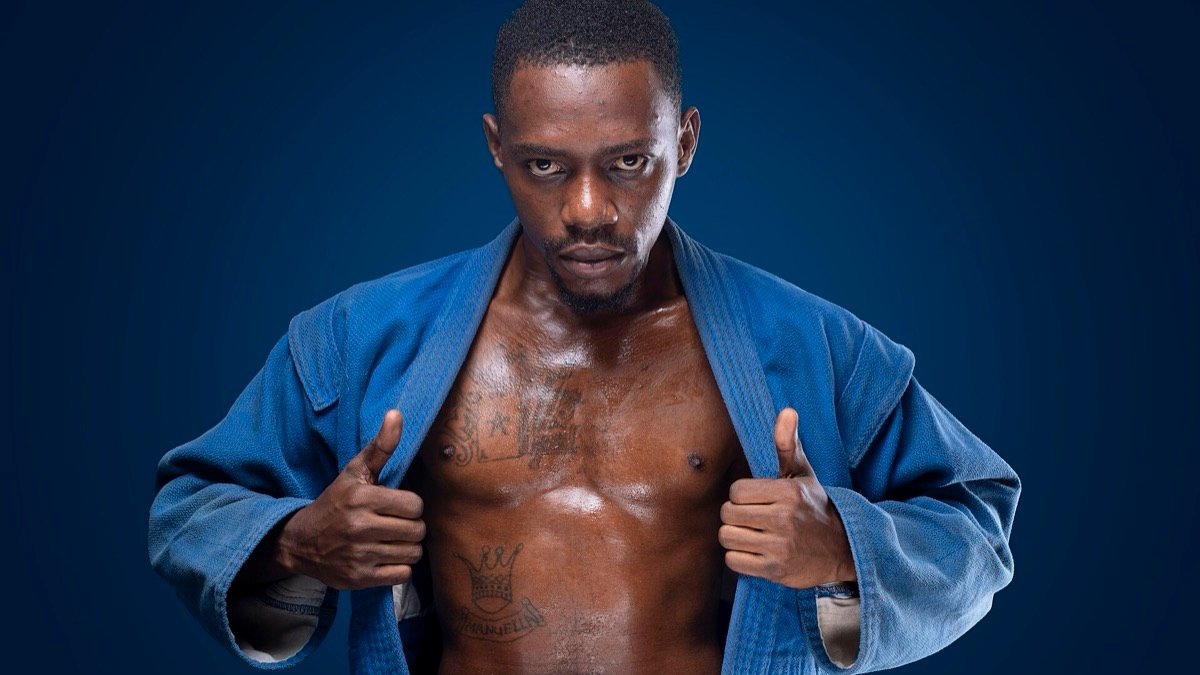
Competitors wear a short jacket, a belt, shorts and wrestling boots. Matches are won by a clean throw while the thrower remains standing, by a submission, or on points accumulated from throws and holds. The jacket gives grips in a way that is closer to judo than to freestyle wrestling.
The footwear is not a detail. Wrestling boots change the mechanics of foot sweeps and leg entanglements, and they are part of why sambo's leg attacks developed the way they did.
Sambo was not inherited. It was assembled, tested, and revised whenever something stopped working.What makes the system unusual
The leg locks
Sport sambo permits a wide range of leg locks while excluding strangles entirely, which is the opposite of the emphasis in judo competition. That single rule difference produced generations of grapplers with an unusually sophisticated understanding of attacks on the knee and ankle.
When mixed martial arts began taking leg attacks seriously, much of the groundwork had already been laid in a tradition that had been refining them for decades. The modern leg-lock game draws on several sources, and this is one of the deepest.
Sport sambo allows leg locks but forbids chokes. Combat sambo allows both, plus strikes - which makes it, in rules terms, remarkably close to mixed martial arts in a jacket.
Combat sambo as a pipeline
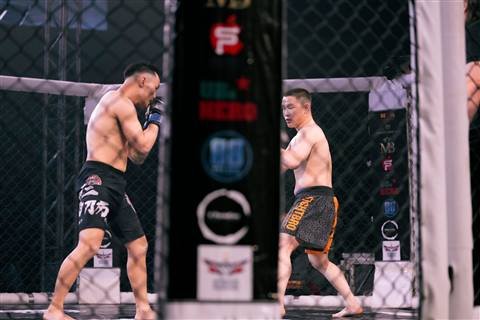
The combat branch adds punches, kicks, knees and elbows to the grappling, contested with protective headgear and the jacket still on. A fighter who has competed in it has already solved most of the problems mixed rules present: closing distance under strikes, defending takedowns while being hit, and finishing on the ground.
This is why so many fighters from Russia and the surrounding region arrive in international competition looking unusually complete. They are not transitioning from a single discipline. They are transitioning from a sport that was already mixed.
A grappling culture, not just a sport
Sambo in the region is a school sport with a competitive structure, coaching tradition and a career path, which produces volume. A large number of children train, a smaller number compete nationally, and the ones who emerge have spent years in genuinely hard competition before anyone outside has heard of them.
Wrestling programmes in the same countries feed the same pool, and many fighters hold credentials in both. The combination of jacket grappling, freestyle wrestling and striking is now one of the most reliably successful backgrounds in the sport.
A sport with a state behind it
Sambo grew inside a system that organised sport deliberately: clubs attached to workplaces and institutions, coaches employed by the state, competitions structured from local to national level. Whatever one thinks of that model, it produced participation numbers that no voluntary system matches.
The infrastructure outlasted the state that built it. Clubs, coaching lineages and competition calendars survived into the present, which is why the pipeline is still producing fighters decades after the political arrangement that created it disappeared.
The international argument
Sambo has spent most of its existence seeking the recognition that judo and wrestling already enjoy, with federations, world championships and a long campaign for Olympic status. The effort has been complicated by the sport's close identification with one part of the world.
In the meantime its influence has spread by the back door. Fighters trained in it compete everywhere, coaches teach its leg entries in gyms that have never heard the acronym, and the techniques have entered the common vocabulary of grappling without the name travelling with them.
Why the name still fits
An art assembled from borrowed parts and revised by results is exactly what mixed martial arts turned out to be. The Soviet instructors reached that conclusion decades before anyone built an octagon, and for the same unromantic reason: they were not trying to preserve a tradition.
They were trying to find out what worked, and they were willing to throw away anything that did not. That method, more than any particular throw or leg lock, is the part of sambo that the modern sport inherited.