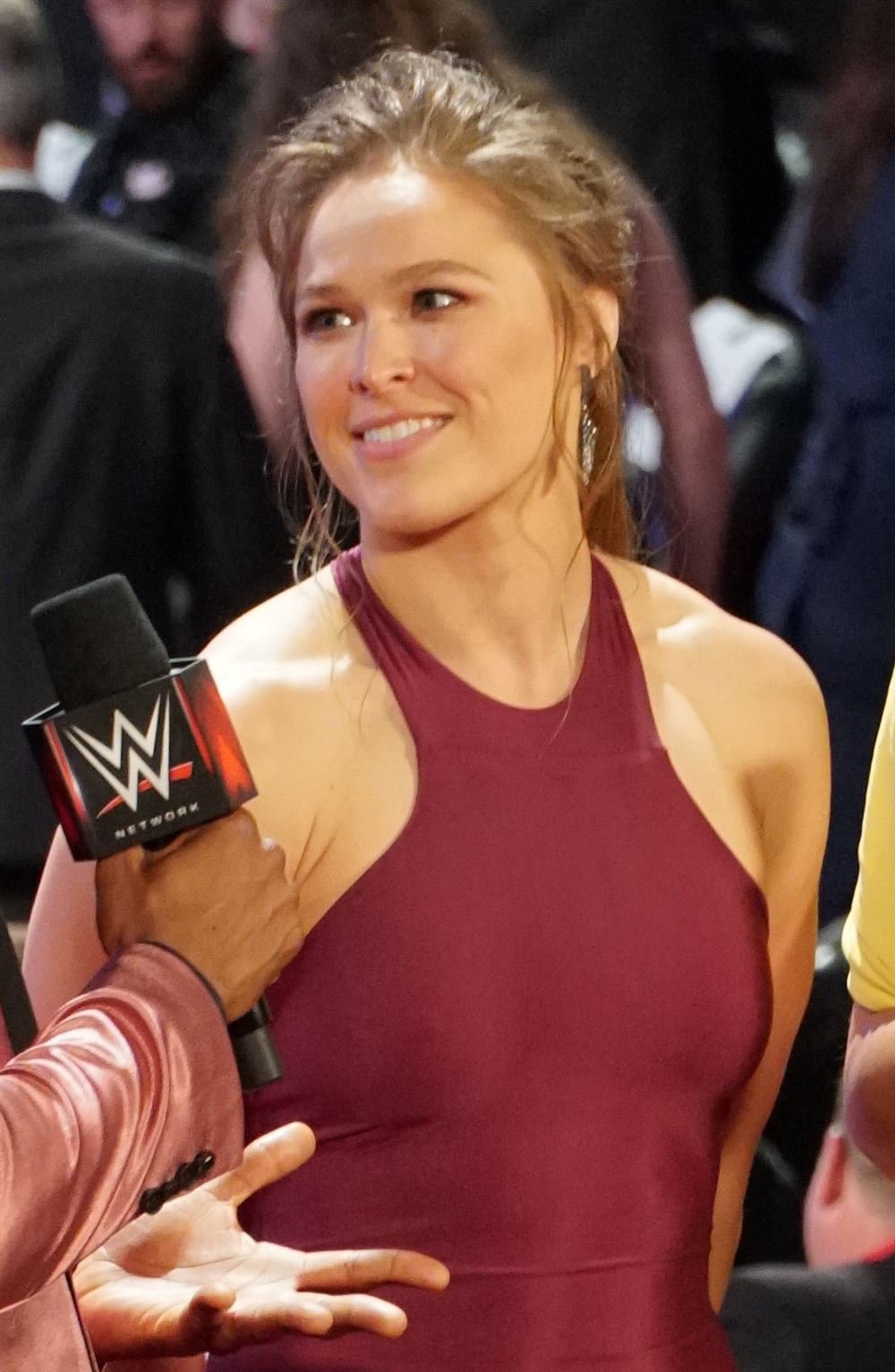
She walked into a sport that did not yet have a place for her, and walked out as its first female champion. Ronda Rousey did not just win fights — she forced an entire industry to imagine women in the cage.
Ronda Rousey was born on 1 February 1987 in California. Her path to mixed martial arts ran through judo, the grappling art she trained in obsessively from childhood. The discipline gave her a weapon that would later define her: a relentless, almost inevitable armbar that turned opponents' own joints against them.
From the Olympic mat to the cage
Before MMA, Rousey was a world-class judoka. At the 2008 Olympic Games in Beijing she won a bronze medal, becoming the first American woman to earn an Olympic medal in judo. That pedigree mattered. When she switched to mixed martial arts, she was not a novice learning to grapple — she arrived with elite throws and submissions already drilled into her body, and she put them to brutal use.
Judo also gave her something less visible: a competitor's temperament forged at the highest level of international sport. She had already learned how to handle pressure, weigh-ins, travel and the loneliness of an individual discipline. In a young sport still working out how to promote women, that experience let her carry herself like a champion before she had ever been called one.
The fighter who changed Dana White's mind
For years the message from the UFC was blunt. President Dana White had said publicly that women would never fight in the promotion. Rousey changed that. Her dominance on smaller stages, combined with a magnetic presence that drew cameras and crowds, made the idea impossible to ignore. The UFC introduced a women's division and named Rousey its first champion, and she repaid the gamble by headlining cards — top billing that had almost always belonged to men.
What made her must-see was not only that she won, but how fast. Opponent after opponent was caught and finished in the opening round, several in a matter of seconds, often by the same armbar everyone knew was coming and still could not stop. She became a genuine mainstream crossover star, crossing into film and magazine covers in a way few fighters of either sex ever had.
Several of Rousey's early title defences ended almost as soon as they began. A number of her wins came inside the first minute, with at least one finished in well under a minute — a pace that helped convince skeptics that women's bouts could be every bit as thrilling as the main events fans were used to.
The losses that proved the point
No champion stays unbeaten forever. In 2015, Holly Holm ended Rousey's run with a head-kick knockout that stunned the sport. A later defeat to Amanda Nunes followed, and Rousey stepped away from the cage. For some, those losses closed the story. In truth they confirmed how far the division had come: the women now challenging for the belt were so skilled, so deep in talent, that even the fighter who built the division could be beaten.
"I'm a do-er. I'd much rather fail at something than not try at all."— Ronda Rousey
A door that stayed open
Rousey's lasting achievement is not a single record but a structure. Before her, a women's division in the biggest MMA promotion was treated as unthinkable. After her, it was permanent. The champions who came later — fighters like Amanda Nunes and the generation behind her — competed on cards that drew the same lights and the same money as the men's, and headlined events of their own.
Her influence also reached beyond the cage. Rousey brought new fans to mixed martial arts, many of them women who had never seen themselves reflected in the sport, and she made the case to promoters that female bouts could sell tickets and carry main events. Young athletes who grew up watching her now treat a women's title as an ordinary ambition rather than a frontier — which is perhaps the clearest sign of how completely she changed the landscape.
Styles change and belts change hands, but the shape of the sport she helped build remains. Ronda Rousey was the proof of concept the UFC did not know it needed: the athlete who turned "women will never fight here" into a women's division that headlines the world.