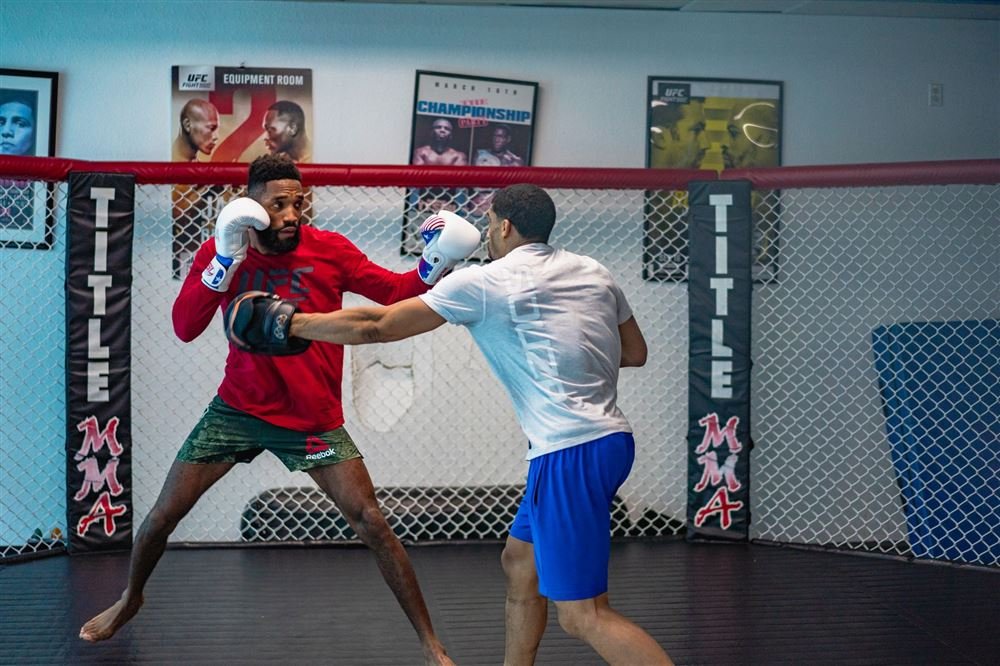
Mixed martial arts looks simple from the outside — two athletes, one cage, few rules. Look closer and the sport is full of quirks, from a trademarked eight-sided ring to gloves barely thicker than a sandwich.
Few sports have grown as fast, or carried as much folklore, as mixed martial arts. In a few short decades it went from a no-holds-barred spectacle to a regulated global business with unified rules and weekly events. Along the way it picked up a vocabulary, a set of customs and a stack of curious details that even regular viewers sometimes get wrong. Here are some of the most interesting.
The famous octagon
The eight-sided cage is so closely tied to the sport that many people use "the octagon" as shorthand for MMA itself. It was an original design choice for the earliest UFC events, intended to be safer and more distinctive than a traditional boxing ring with ropes that fighters could fall through. The shape stuck, and the UFC went on to register "Octagon" as a trademark, which is why other promotions tend to use plain round cages or differently named enclosures. The reported dimensions vary by source and event, but the standard competition cage is generally described as around 30 feet across.
From strawweight to heavyweight
MMA is divided into weight classes so that fighters face opponents of a similar size, and the range is enormous. At the lighter end, divisions such as strawweight begin at around 115 pounds; at the top, the heavyweight limit is usually given as 265 pounds, with anything above that often called super heavyweight. That spread means the smallest professional competitors and the largest can differ by well over a hundred pounds — a gap you would never see inside a single bout. Exact limits differ slightly between organizations and athletic commissions, so the figures are best treated as approximate.
- Lighter divisions reward speed, volume and cardio over many rounds.
- Heavier divisions tend to end faster, with single power shots more likely to settle a fight.
- Many fighters "cut weight," dropping water before the weigh-in to compete in a lower class — a practice safety officials continue to scrutinize.
"It is not about being the biggest or the strongest. It is about being the smartest fighter in the cage."— A common refrain among MMA coaches
Tiny gloves and "tapping out"
One detail that surprises newcomers is how small the gloves are. Standard MMA gloves weigh around four ounces, a fraction of the twelve to sixteen ounces typical in boxing. They are open-fingered on purpose, so fighters can grip, grapple and submit opponents as well as strike. The trade-off is that less padding generally means more cuts and a higher chance of a knockout than heavily gloved boxing.
Then there is "tapping out." Because so much of MMA happens on the ground, a fighter caught in a choke or a joint lock can surrender by physically tapping the mat or the opponent's body, usually two or more times. It is a clear, instant signal to the referee that the fighter concedes rather than risk injury. Tapping is not seen as shameful — it is simply how submissions end a fight safely, and even champions tap when they are caught.
If a fighter cannot reach the mat or the opponent to tap — for example with both arms trapped — a verbal submission counts too. A shout or even a clear cry of pain can prompt the referee to stop the bout, which is why officials watch a trapped fighter's face as closely as their hands.
A sport built on contrasts
What makes MMA so curious is how many opposites it holds at once. It is brutal yet tightly regulated, ancient in its techniques yet modern as a spectacle, individual in the cage yet built on whole teams of coaches and training partners. A single contest can blend wrestling, boxing, kickboxing, judo and Brazilian jiu-jitsu, so a fighter must be fluent in several disciplines rather than master of just one.
That blend is exactly why the details matter. The shape of the cage, the size of the gloves, the span of the weight classes and the simple act of tapping out are not trivia for trivia's sake — each one shapes how the fights actually unfold. Understanding them turns a confusing scramble into a readable contest, and that is half the fun of following the sport.