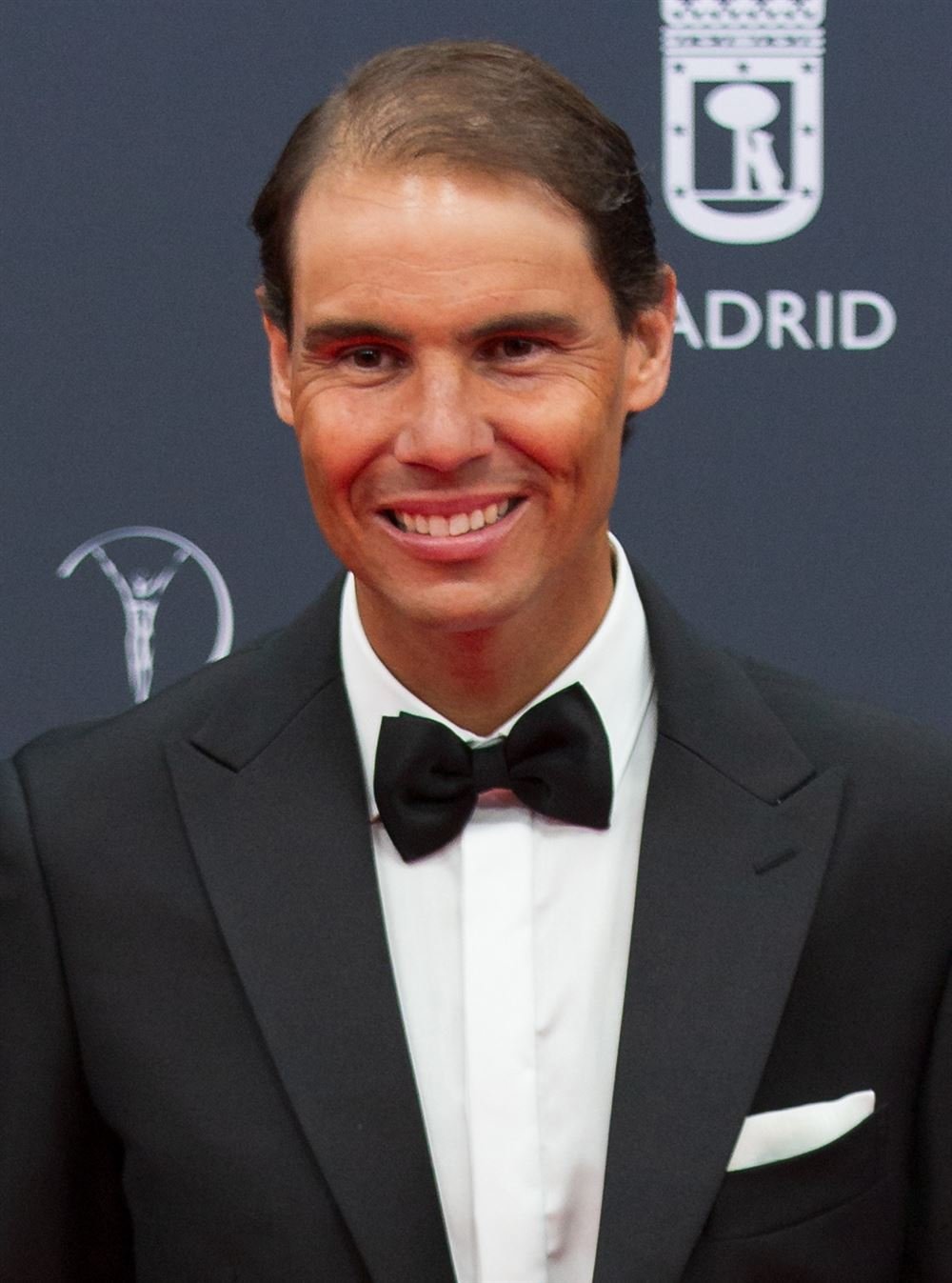
No player has ever owned a single tournament the way Rafael Nadal owned Roland Garros. On the red clay of Paris he turned defence into art and willpower into a weapon — and earned a nickname that needs no explanation: the King of Clay.
Rafael Nadal was born on 3 June 1986 in Manacor, on the Spanish island of Mallorca. Coached from a young age by his uncle Toni, he was a naturally right-handed boy who learned to play tennis left-handed — a quirk that would later torment opponents with the angles and spin he could generate. A gifted footballer as a child, he chose the racket over the ball, and by his late teens he had announced himself as one of the most ferocious competitors the sport had ever seen.
Even as a youngster, Nadal carried himself with a discipline that belied his age. He burst onto the professional tour wearing sleeveless shirts and pirate shorts, all coiled energy and bouncing legs, and immediately began troubling players a decade older than him. What looked like raw aggression was in fact a carefully built game — relentless court coverage, a willingness to grind through long rallies, and a competitive fire that rarely dimmed even when a match seemed lost.
A teenager who tamed the clay
Nadal won the French Open on his debut in 2005, just after turning 19, beating the best players in the world on a surface that rewards patience, footwork and stamina. It was the start of something history had never witnessed. Where others peaked and faded in Paris, Nadal simply kept winning, returning year after year to defend a kingdom that seemed to belong to him alone.
The King of Clay
Nadal won the French Open more than a dozen times — 14 by the end of his career — a level of dominance at a single major that has no equal in tennis history. For years, losing to Nadal at Roland Garros was almost unheard of; reaching the final often felt like the real achievement, because the title was as good as decided. His heavy, looping topspin forehand kicked up above shoulder height on the slow clay, dragging opponents off the court and out of their comfort zone.
"I'm not here to win matches, I'm here to fight every single point as if it were the last."— Rafael Nadal
But to label him only a clay specialist would miss the point. Nadal also won multiple titles at Wimbledon, the US Open and the Australian Open, proving he could adapt his game to grass and hard courts. He completed the career Grand Slam — winning all four major titles at least once — and added an Olympic singles gold medal, cementing his place among the most complete champions the game has produced. To do so he refined a serve, flattened his groundstrokes for faster surfaces, and learned to shorten points when the slow, grinding rallies of clay were no longer an option.
Rivalries that defined an era
Nadal's career cannot be told without Roger Federer and Novak Djokovic. His duel with Federer — left-hander against right-hander, brute topspin against silken grace — produced some of the most celebrated matches ever played, including a Wimbledon final widely regarded as the greatest of all time. Against Djokovic he fought a different kind of war, baseline marathons of relentless physicality. Together the three pushed one another to totals once thought impossible.
Nadal's roar of "Vamos!" — Spanish for "Let's go!" — became the soundtrack of his career, a cry of pure defiance that fans around the world learned to recognise and rivals learned to dread.
A legacy of intensity
What set Nadal apart was not only his talent but his refusal to give up a single point. He chased down lost causes, won matches he had no business winning, and carried a string of serious injuries that would have ended lesser careers. His meticulous on-court rituals and humility off it made him one of the most respected athletes of his generation.
Beyond the trophies, Nadal helped lift Spain to multiple Davis Cup triumphs and spent more than a hundred weeks ranked world number one, despite sharing his era with two of the greatest players who ever lived. His sportsmanship, his respect for opponents and his calm dignity in both victory and defeat earned him admirers far beyond his home country.
As of recent years he stands among the most decorated men's singles players in history, with more than 20 major titles to his name. Records will keep shifting and new champions will rise, but one crown looks permanent: on the red clay of Paris, Rafael Nadal reigned like no one before him, and the title of King of Clay is his for good.