In 1877, a London croquet club staged a small lawn tennis tournament to raise money for a broken roller. It became Wimbledon — the oldest tennis championship on earth, and the birthplace of a sport's enduring traditions.
Tennis as we know it is younger than many people assume. The graceful, white-clad spectacle of Wimbledon traces back to a specific decade — the 1870s — when a handful of rules, a rubber ball that could bounce on grass, and a fashionable garden pastime came together to create the game played around the world today. To understand the sport, it helps to start with the club that gave it its grandest stage.
From garden game to a written set of rules
Racket-and-ball games are ancient. "Real tennis", played indoors against sloping walls, was a favourite of European royalty for centuries. But the outdoor game of lawn tennis is a Victorian invention. In 1874 a British army officer, Major Walter Clopton Wingfield, patented a boxed set for a court game he marketed under a Greek-flavoured name, and he is often credited with popularising lawn tennis for the garden-party set. His hourglass-shaped court and idiosyncratic rules did not last, but the idea caught on quickly among the well-to-do.
What lawn tennis needed was a standard. That came in 1877, when the All England Croquet Club — short of money and looking for a new attraction — added "Lawn Tennis" to its name and drew up a clear code: a rectangular court, a net, and a scoring system close to the one still used. The rules were tidy enough to spread, and they spread fast.
The first Championships
The inaugural tournament was held in July 1877 at the club's grounds in Worple Road, Wimbledon. It featured only a men's singles event; around two dozen players entered, and a modest crowd paid to watch the final. The winner, Spencer Gore, was a rackets player who exploited a tactic — moving forward to volley at the net — that the early rules had not anticipated. From the very first edition, the sport was already evolving as players probed its limits.
Women's singles arrived in 1884, and over the following decades the event grew from a garden curiosity into the most prestigious title in the game. In 1922 the Championships moved to their present, larger home on Church Road, where Centre Court and its famous grass would become a global landmark.
"Wimbledon is the only Grand Slam still played on grass — the surface the sport was born on."— PuroGoal Editors
Traditions that defined a sport
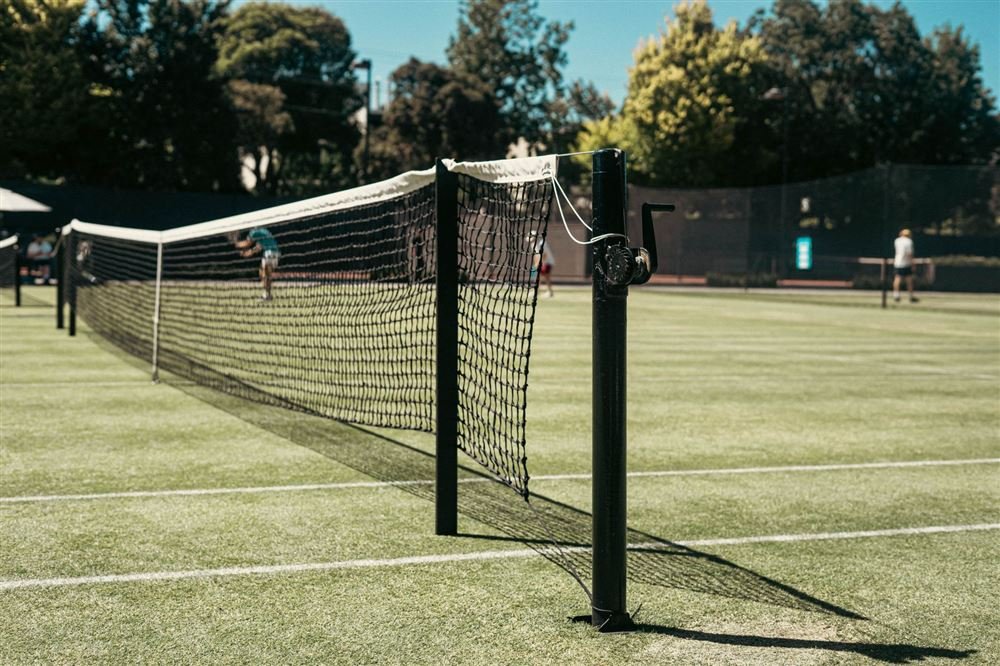
Few sporting events guard their customs as carefully as Wimbledon, and many of those customs date back to its earliest years. Matches are still contested on natural grass, a fast, low-bouncing surface that rewards quick reflexes and clean serving. Competitors are required to wear almost entirely white clothing, a rule rooted in the Victorian wish to hide perspiration and one the tournament enforces more strictly than any other.
Then there is the food. Strawberries and cream have been associated with the Championships since its early days, and spectators get through many tonnes of strawberries across a single fortnight. Royal patronage adds another layer of ceremony: the British royal family has long been linked to the club, and the Royal Box on Centre Court remains one of sport's most coveted seats.
The terms "tennis" and the quirky scoring — love, fifteen, thirty, forty — predate lawn tennis and were inherited from the older indoor game of real tennis. Several theories explain "love" and the count, but none is fully proven, which is part of the game's charm.
Why it still matters
Within a generation of those 1877 rules, lawn tennis had crossed oceans. National championships sprang up elsewhere, and the four events now known as the Grand Slams took shape, with Wimbledon as the senior member. The game's gear changed — wooden rackets gave way to graphite, and play grew faster and more powerful — but the framework set out by that cash-strapped London club proved remarkably durable.
That is the quiet achievement of Wimbledon's founders. Looking for a way to fix a roller and fill a calendar, they codified a pastime into a sport, and wrapped it in traditions so resilient that, generations later, the world still stops each summer to watch players in white chase a ball across the grass.