
Most striking sports give a fighter two weapons. Thailand's national sport gives him eight, and the arithmetic changes everything: the distances, the footwork, the way a round is scored, and what happens when two men end up chest to chest with nowhere to go.
The nickname counts the surfaces that are allowed to make contact: two fists, two elbows, two knees and two shins. Adding elbows and knees to a boxing ring does not simply give a fighter more options. It removes the safe middle distance where boxers do much of their work, because the range at which a boxer feels comfortable is exactly the range at which an elbow lands.
A ring culture, not just a technique
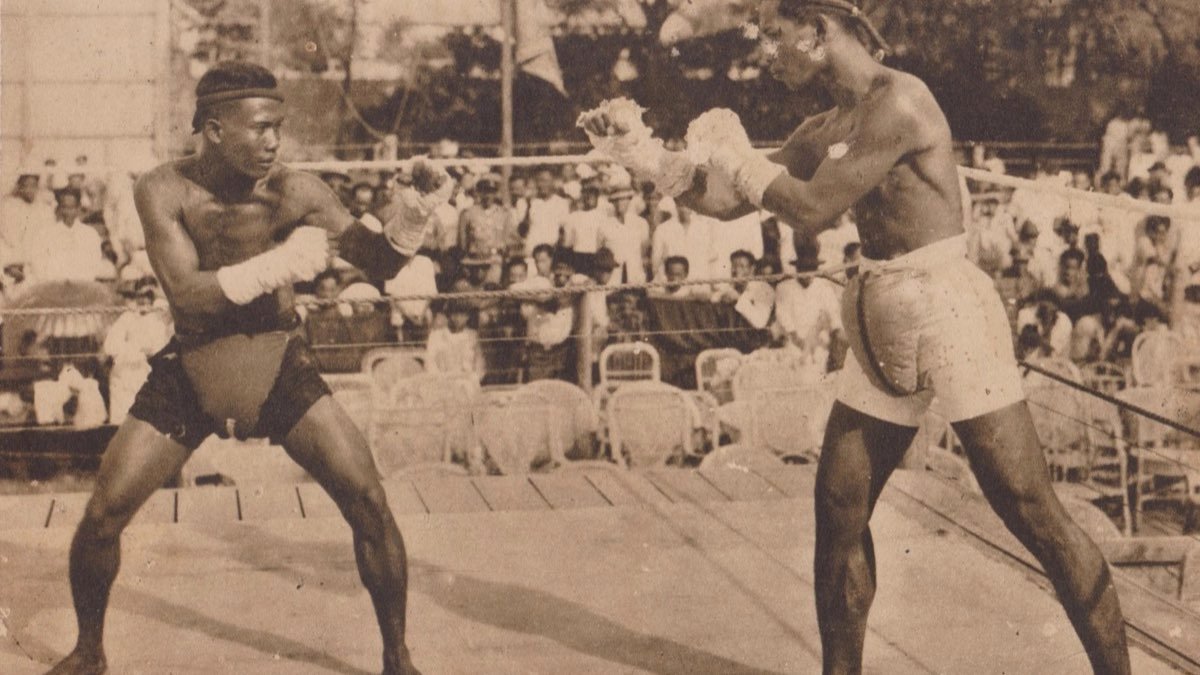
Muay Thai grew out of older Thai martial traditions and became a professional stadium sport with its own music, its own pre-fight dance and its own betting culture. Fights are accompanied live by a small ensemble whose tempo rises with the action, and the crowd's wagering shifts round by round in a way that is audible from the seats.
That culture shapes the fighting. Early rounds are often deliberately measured while both men gather information and the gallery makes up its mind. Judges traditionally weight the later rounds more heavily, so a fast start is worth less than it would be elsewhere, and a fighter who is clearly ahead may simply stop engaging.
The shin as a tool
A Thai kick is thrown with the shin rather than the instep, swung from the hip like a bat rather than snapped from the knee. It is slower to retract and harder to disguise, and it carries considerably more weight through the target. The trade is deliberate: less speed for more consequence.
The same bone does the defending. Rather than stepping away from a low kick, a Thai fighter lifts the leg and takes it on the shin, which is why conditioning the lower leg is a standard part of training. The block is also a reset: it keeps the fighter in range to answer immediately.
The clinch is the hidden half
Outsiders usually notice the kicks first. Thai fighters tend to think about the clinch, the close-quarters position where the hands fight for control of the head and neck while the knees work underneath. It functions as a kind of upright wrestling, with the same logic of position, posture and balance.
Winning the clinch means owning the inside hand position and keeping the opponent's posture broken. From there knees are available and the other man's offence largely is not. Fighters who are losing the exchange spend their energy trying to peel hands off their neck and create space, and that effort is itself exhausting.
The clinch is the part of Muay Thai that looks like nothing is happening, and it is usually where the round is being decided.What the scorecards reward
Elbows change the geometry
An elbow travels a short distance and arrives with a small, hard surface, which makes it effective precisely where punches start to crowd. Its presence forces both fighters to think differently about closing distance, since the act of stepping in is also the act of entering elbow range.
The threat is as useful as the technique. A fighter who has shown an elbow once has bought himself caution for the rest of the contest, and caution opens up everything else he wants to do.
Traditional Thai scoring rewards balance, composure and visible effect rather than volume. A fighter who throws more but is pushed back, or who lands cleanly but stumbles afterwards, can lose a round he appeared to be busier in.
Why mixed martial arts adopted it
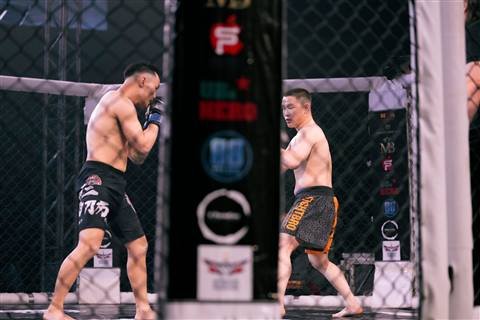
When fighters began combining disciplines, Thai striking travelled well for a practical reason: it already assumed the opponent would be close, grabbing and leaning. Boxing footwork assumes space that a mixed-rules fight rarely gives, while Thai mechanics are built for contact.
The low kick to the thigh found an especially permanent home. It is hard to defend without committing the legs, it accumulates over a fight, and it degrades exactly the footwork a wrestler needs to shoot and a striker needs to circle.
What had to be modified
Not all of it survived unchanged. The classic Thai stance is upright and square with the weight back, which is excellent for checking kicks and catastrophic against takedowns. Fighters crossing into mixed rules lower their base, stagger their feet and sacrifice some of the kicking game to stay difficult to lift.
The clinch had to change too. In Thailand a fighter can pull a head down and work knees for a long stretch. In a cage the same grip invites a trip or a body lock, so the position is used in shorter bursts and with constant attention to the hips.
Training the body for it
A traditional Thai training day is built around volume: long runs, hundreds of kicks on pads, rounds of clinch work with a partner, and bag work that focuses on repetition rather than variety. Technique is corrected constantly and in small amounts rather than taught in formal lessons.
The method produces fighters who can throw the same kick ten thousand times without losing shape, and who are comfortable in the clinch because they have spent more hours there than most foreign visitors have spent in the gym.
A sport that exports well
Thailand still produces the deepest pool of professional stadium fighters anywhere in striking, and gyms across the country take foreign students, which is why the techniques spread quickly once mixed martial arts created demand for them.
What travelled was more than a kick. It was a way of thinking about range: that the distance where you are most comfortable is the distance your opponent wants to deny you, and that whoever controls the clinch controls how much of the fight is spent anywhere else.