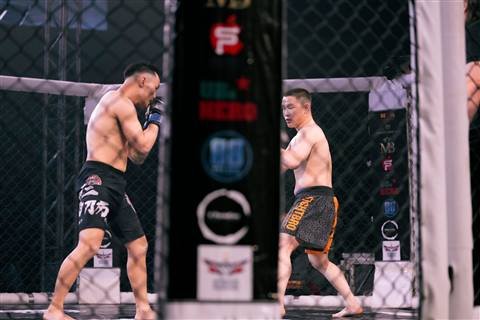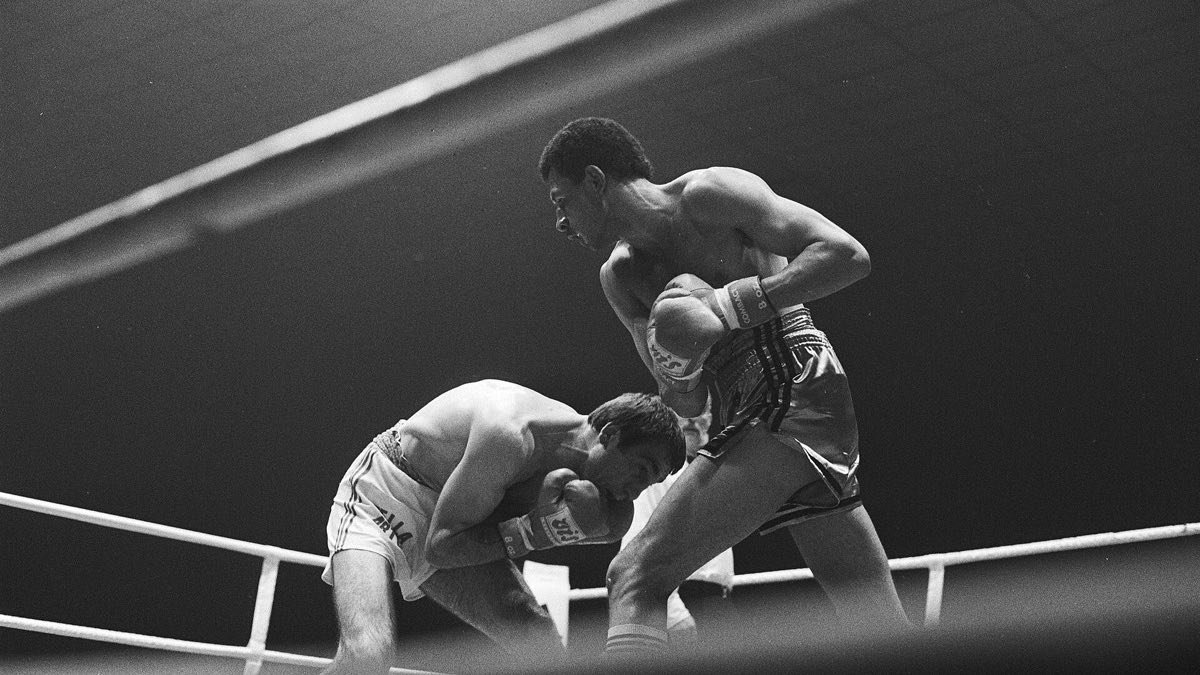

A boxer and a mixed martial artist standing in front of a mirror look similar for about a second. Then you notice the feet are further apart, the weight sits differently, the hands are lower and the whole shape is a compromise with a problem boxers never have to think about: the other man is allowed to grab the legs.
Every striking decision in mixed rules is made twice. First, is this a good strike? Second, what does throwing it leave open? A punch that rotates the hips fully is a better punch and a worse position, and learning to live with that trade is most of what separates a fighter who strikes well in the cage from one who strikes well on a bag.
The stance is a compromise
A boxing stance is narrow and bladed, which is efficient for punching and dreadful for defending a shot at the legs. A wrestling stance is wide and square, which is stable and makes a fighter slow and easy to hit. The stance used in mixed martial arts sits awkwardly between them and satisfies neither sport completely.
Most fighters stand slightly wider and more squared than a boxer, with the weight distributed more evenly and the lead leg light enough to be lifted for a kick or pulled back from one. It costs some punching power and buys the ability to survive a level change.
Four ranges instead of one
Boxing has a single range to manage. Mixed martial arts has at least four: kicking distance, punching distance, the clinch and the floor. A fighter is always either in the range he wants or travelling through one he does not, and the travelling is where he is most vulnerable.
This is why footwork matters more here than almost anywhere else. Moving in and out of range in a straight line is the classic error, because straight lines are predictable and a predictable entry is a takedown waiting to happen. Good fighters arrive at an angle and leave on a different one.
The hands sit lower, and there is a reason
The high tight guard of boxing does not fit a sport with kicks, knees and takedowns. Hands held high cannot frame against a clinch or post against a shot, and they leave the body and legs unattended against attacks a boxer never faces.
What replaces it is a more flexible set of defences: parries, head movement, framing with the forearms, and a lead hand that spends as much time measuring distance as covering the chin. It is less tidy than a boxing guard and solves a larger set of problems.
Every punch in mixed martial arts is also a decision about your legs.The trade behind the stance
The jab does more work here
In boxing the jab sets up power punches. In mixed rules it also measures the gap, interrupts a level change, discourages a fighter from stepping in behind a kick and buys the half-second needed to reset. It is the cheapest tool available and it manages the most problems.
Fighters who neglect it tend to live in one of two bad places: too far away to threaten anything, or close enough that every exchange is a coin toss. The jab is what makes the space in between usable.
Open-fingered gloves are small enough to grip with, which is why fighters can clinch and wrestle, and light enough that hands are protected far less than in boxing - one reason defensive habits here are built around not being hit rather than around absorbing it.
Kicks: the reward and the risk
A kick is the longest weapon a fighter has and the only one that can damage the legs, which is why the low kick to the thigh has become a staple at every level. It accumulates quietly, degrades footwork and makes both the shot and the sprawl harder for whoever is receiving it.
The risk is that a kicking leg can be caught. A caught leg is a free takedown, so kicks are usually thrown with an exit already planned: off an angle, behind a punch, or with the intention of turning away as soon as it lands.
Striking inside the clinch
A great deal of the striking in a modern fight happens with both men holding onto each other against the fence. Short elbows, knees to the thigh and body, and punches thrown from odd angles with no space to rotate - none of it looks like the striking taught in a boxing gym, and all of it scores.
The skill here is hand fighting more than punching. Whoever wins the inside position gets to throw while the other man is occupied keeping his posture, and the strikes follow from that advantage rather than creating it.
Feints do more work than punches
Because every movement carries a second meaning, feints are unusually powerful here. A level change that does not become a takedown still moves the opponent's hands down. A shoulder that does not become a punch still freezes his feet. The sport rewards suggestion as much as execution.
Good fighters spend a surprising amount of a round selling things they do not intend to do. The purpose is to collect reactions, and the collection is what makes the real attack land later.
Why the best strikers are rarely pure strikers
The fighters who look most comfortable on their feet in mixed martial arts are almost never the ones with the purest striking pedigree. They are the ones whose grappling is good enough that they can ignore the threat of a takedown and simply strike.
That is the quiet rule of the discipline. Freedom on the feet is bought with competence on the floor, and a fighter who has not paid for it will always be striking at something less than full commitment.