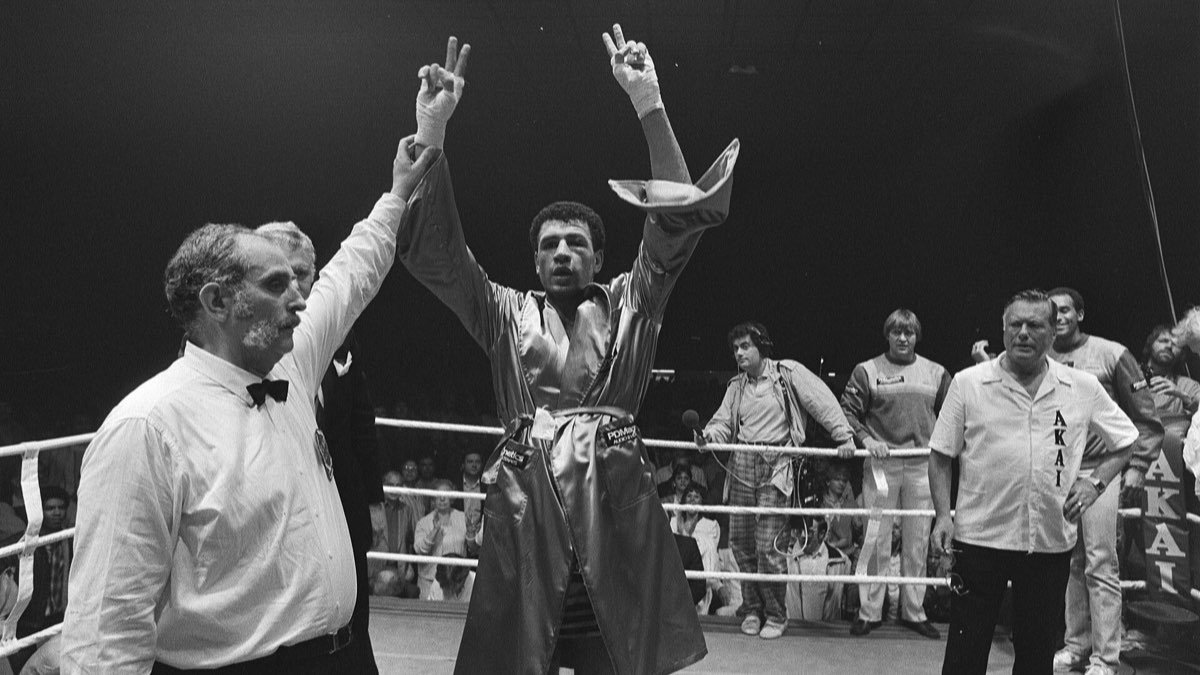

A fight that goes the distance is handed to three people sitting at the edge of the cage, each of whom has been watching from a different angle with no replay and no pause button. What they are asked to do is narrower than most viewers assume, and understanding the question explains most of the arguments that follow.
Under the Unified Rules of Mixed Martial Arts, which most athletic commissions have adopted, each round is scored on its own using a ten-point must system. The judge decides who won the round, gives that fighter ten, and gives the other fighter nine or fewer depending on how wide the gap was. The rounds are then added up.
Each round is a separate verdict
This is the part that causes the most confusion. Judges are not scoring the fight. They are scoring three or five independent contests and adding the results, which means a fighter can dominate most of the time and still lose, or spend two rounds in trouble and win by taking the other three narrowly.
It also means momentum does not carry. A fighter who was badly hurt in the first round starts the second level with his opponent, at least on paper. Spectators tend to score fights cumulatively and are then surprised by the announcement.
The criteria, in order
The rules set a priority. Effective striking and grappling come first, effective aggressiveness second, and control of the fighting area third. The ordering matters: a judge is supposed to reach the lower criteria only when the higher ones do not separate the fighters.
Guidance issued to judges has over time pushed the emphasis toward visible effect rather than activity. Landing cleanly and changing the other fighter's condition counts for more than throwing often, and a takedown counts for what is done after it rather than for the takedown itself.
What a ten-eight round means
Most rounds are scored ten to nine. A ten-eight is available when one fighter dominates in a way that goes beyond simply winning: sustained control, accumulated effect, or a stretch in which the other fighter is unable to offer anything back. Scores of ten to seven exist in the rules and are almost never seen.
Judges have historically been reluctant to use ten-eight, which produced close decisions in fights that were not close at all. Repeated guidance has encouraged its use, and the result is a scoring culture that still varies noticeably from commission to commission.
Three judges watching the same fight from three different seats will sometimes see three different fights. The system is built on that being acceptable.Why split decisions exist
The shapes a decision can take
If all three judges favour the same fighter, the decision is unanimous. If two favour one and the third the other, it is split. If two favour one and the third scores it even, it is a majority decision. Draws occur when the cards cancel out, and they are rare rather than impossible.
Non-title bouts are normally three rounds and title fights and main events five, so the arithmetic differs. A fighter who loses the first two rounds of a three-round contest is in a position that a five-round contest would still leave recoverable.
Judges score from cageside and see the fight from a fixed, low angle without replays. A sequence that looks decisive on an overhead camera may have been almost invisible to one of the three people whose opinion counts.
Why control is contested
The most persistent argument in the sport is about time spent in a controlling position with little happening. Critics say holding someone against a fence should not win a round. Defenders answer that imposing position is a skill, and that being unable to escape is a failure worth penalising.
Both positions are consistent with the written criteria, which is exactly the problem. The rules say control is the third tiebreaker, but they do not say how much nothing has to happen before a controlling fighter stops winning.
Who the judges are
Judging is licensed by the athletic commission in whichever jurisdiction the event takes place, which means standards, training and experience vary between states and countries. The same fight, in two places, may be officiated by people who were trained very differently.
There is also no realistic career path that makes judging a full-time profession for most officials. That structural fact, more than any individual error, is what reform proposals usually target.
The referee is not a judge
The two roles are frequently confused. The referee's job is safety and rules enforcement: stopping the contest, calling fouls, restarting from a position, deducting points for infractions. He does not score anything, and his view of who is winning has no official weight.
The one place the roles meet is the point deduction. A referee who takes a point for a foul changes the card directly, and in a close fight that single decision can outweigh everything three judges did all night.
Fouls and what they cost
The rules list a long set of prohibited actions, from strikes to the back of the head to grabbing the fence. Most are handled with a warning, and a referee will usually give several before taking anything. A deduction is a deliberate escalation rather than an automatic response.
Accidental fouls are treated differently from intentional ones, and the difference affects what happens if a fighter cannot continue. The outcome may be a no contest, a technical decision based on completed rounds, or a disqualification, depending on the cause and the timing.
What would change if the system changed
Alternatives are regularly proposed: scoring the fight as a whole, using half-points, or giving judges replay access. Each solves something and creates something new. Whole-fight scoring removes the round problem and introduces disputes about weighting. Half-points add resolution and complexity.
For now the system remains the one the sport grew up with, and the honest description of it is this: a reasonable attempt to turn fifteen or twenty-five minutes of chaos into a number, performed live, by three people who are not allowed to look again.