
Olympic basketball has produced the strangest gold medal final in the sport's history, the most disputed final seconds in any Olympic competition, and the moment the United States stopped being automatically the best team on earth. For a tournament most people only watch every four years, it has an unusually dramatic record.
The game appeared at the Olympics as a demonstration event in 1904 and became a full medal sport in Berlin in 1936. James Naismith, by then an elderly man, travelled to watch the sport he had invented make its official debut, and presented medals to the first champions.
A final played in the mud
The 1936 tournament was staged outdoors on courts of sand and clay, a decision nobody defended afterwards. Heavy rain fell during the gold medal game between the United States and Canada, turning the surface into something closer to a field than a court. Dribbling became almost impossible and the final score, which the United States won, was lower than some single quarters in the modern game.
Everyone agreed that the experiment had failed. Olympic basketball has been played indoors ever since, and the 1936 final survives as a photograph of men in soaked jerseys standing in puddles, playing for a gold medal.
Munich, and three seconds
The United States won every Olympic tournament it entered until 1972, when it met the Soviet Union in the final in Munich. The Americans went ahead in the closing seconds and then the final three seconds were replayed twice, following a sequence of timekeeping and officiating decisions that has been argued about ever since. The Soviet Union scored at the end of the third attempt and won.
The United States team refused to accept the silver medals and has never collected them. The medals remain in storage in Switzerland, and surviving players have repeatedly declined suggestions that they should be handed to their families.
The amateur era ends
For decades Olympic basketball was restricted to amateurs, which in practice meant college players for the United States and state-employed athletes for several other countries. The imbalance was obvious and it eventually produced results: the Soviet Union beat the United States again in 1988, and the argument for change became impossible to resist.
The international federation voted in 1989 to allow professionals, and the consequence arrived in Barcelona in 1992 in the form of a team that most observers still consider the strongest ever assembled in any sport. The gap in those games was enormous. The long-term effect was the opposite of what critics predicted.
The tournament that was supposed to end international competition ended up creating it.- On the 1992 Olympic basketball tournament
The world catches up
Children across Europe, South America, Africa and Asia watched the 1992 tournament and wanted to play. Within a generation the professional leagues of North America were full of players from those countries, and national teams that had been overmatched became genuine contenders.
Argentina won the gold medal in Athens in 2004, beating the United States along the way with a team built on passing and collective defence rather than individual talent. Spain, France, Serbia, Lithuania, Australia and others have all produced sides capable of winning any single game against anybody.
The women's tournament
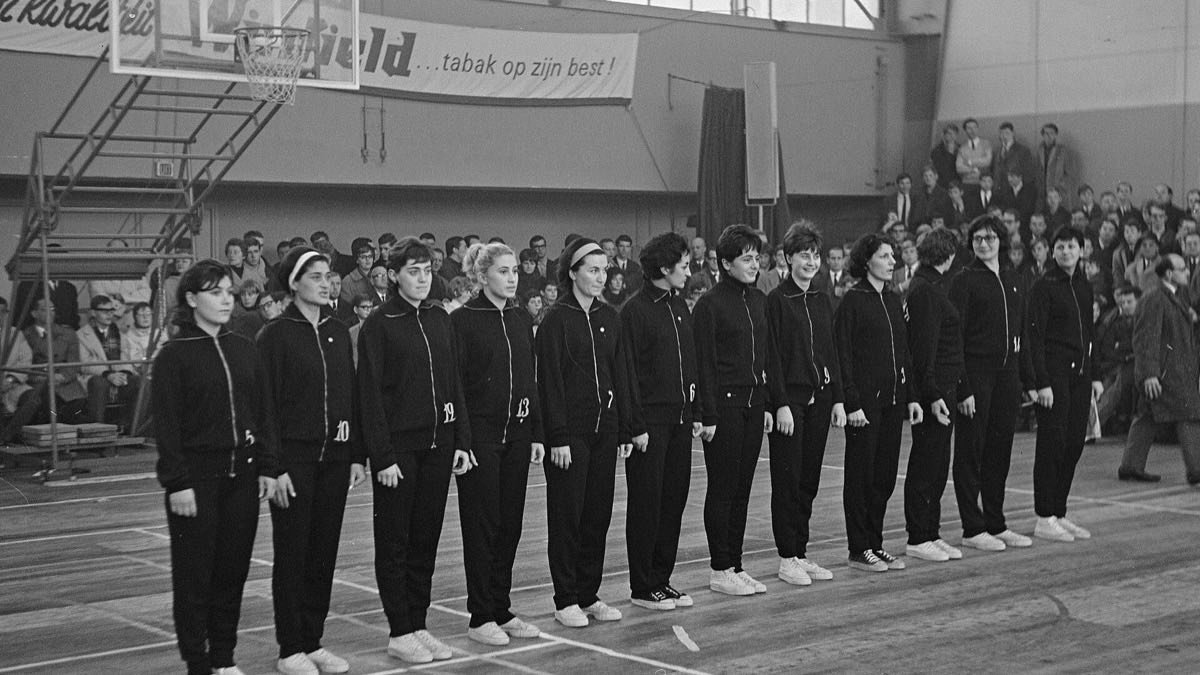
Women's basketball joined the programme in 1976, with the Soviet Union winning the first gold medal. The United States has dominated the event for most of the period since, assembling teams of professionals from its own league and from clubs around the world, and the standard of competition has risen sharply as European and Australian programmes matured.
A third format arrived recently. Three-on-three basketball, played on a half court with a single hoop and a short clock, became an Olympic event in Tokyo, bringing the version of the game that most people actually play into the official programme.
The silver medals from the 1972 men's final have never been claimed. They are still held by the International Olympic Committee in Lausanne.
Boycotts and empty places
Olympic basketball has not been immune to politics. The United States did not take part in Moscow in 1980 because of a boycott, and several Eastern European countries stayed away from Los Angeles four years later in response. Two tournaments in a row were therefore decided without some of the strongest teams in the world.
Yugoslavia, Italy and the Soviet Union took gold medals in that period, and the quality of the basketball was high. But the medals from those years are discussed with an asterisk attached, which is unfair to the teams that won them and difficult to avoid.
Getting there is the hard part
Only a small number of teams reach the Olympic tournament, and qualification is brutal. Continental championships and a short series of qualifying tournaments eliminate most of the world, which regularly means that a country ranked among the best does not make it at all.
That scarcity is part of why the tournament retains its weight. A national team may wait eight or twelve years for another chance, and the players who do arrive are usually carrying a squad that has been building towards those two weeks for most of a decade.
Why the tournament still matters
Club basketball is where the best players spend their careers, and the Olympic tournament is short, occasional and occasionally chaotic. It is also the only place where national teams meet with everything available to them, and where a well-drilled side can beat a collection of superior individuals.
That is what keeps it interesting. Every four years the sport's assumptions are tested by teams who have played together for years against teams assembled in a few weeks, and the result is not always the one the team sheets predict.