
Ice hockey's Olympic history begins in the wrong season. The sport appeared at the Summer Games of 1920 in Antwerp, four years before a Winter Olympics existed, played in an indoor rink in April. It has been part of the winter programme ever since, and for most of that time it has been shadowed by a single question: who is allowed to play.
That first tournament was won by Canada, represented by the Winnipeg Falcons, a club side rather than a selected national team. The Falcons had been formed largely by players of Icelandic descent who had been excluded from other Winnipeg clubs, which gives the sport's first Olympic champion a more interesting history than the result alone suggests.
From 1924 at Chamonix the tournament moved to the newly created Winter Games, and the pattern of the early decades was established quickly. Canada sent a senior amateur club, that club beat everyone, and the margins were frequently extravagant. European hockey was two decades behind and knew it.
The amateur problem
The Olympic movement of that era required competitors to be amateurs, which created a difficulty that was never honestly resolved. Canada's best players were professionals in the NHL and therefore ineligible, so the country was represented by the strongest amateur club available. As professional hockey absorbed more of the talent, those clubs grew relatively weaker.
Canada won again in 1952 at Oslo, with the Edmonton Mercurys, and then did not win another Olympic gold medal for half a century. The explanation is not that the country declined. It is that other nations found ways of fielding their best players while remaining nominally amateur, and Canada did not.
The Soviet era
The Soviet Union entered Olympic hockey in 1956 and won immediately. Their players held military or industrial positions on paper and trained full-time in practice, which satisfied the letter of the amateur rules and nothing else. For the next three and a half decades they were the team to beat, interrupted only occasionally.
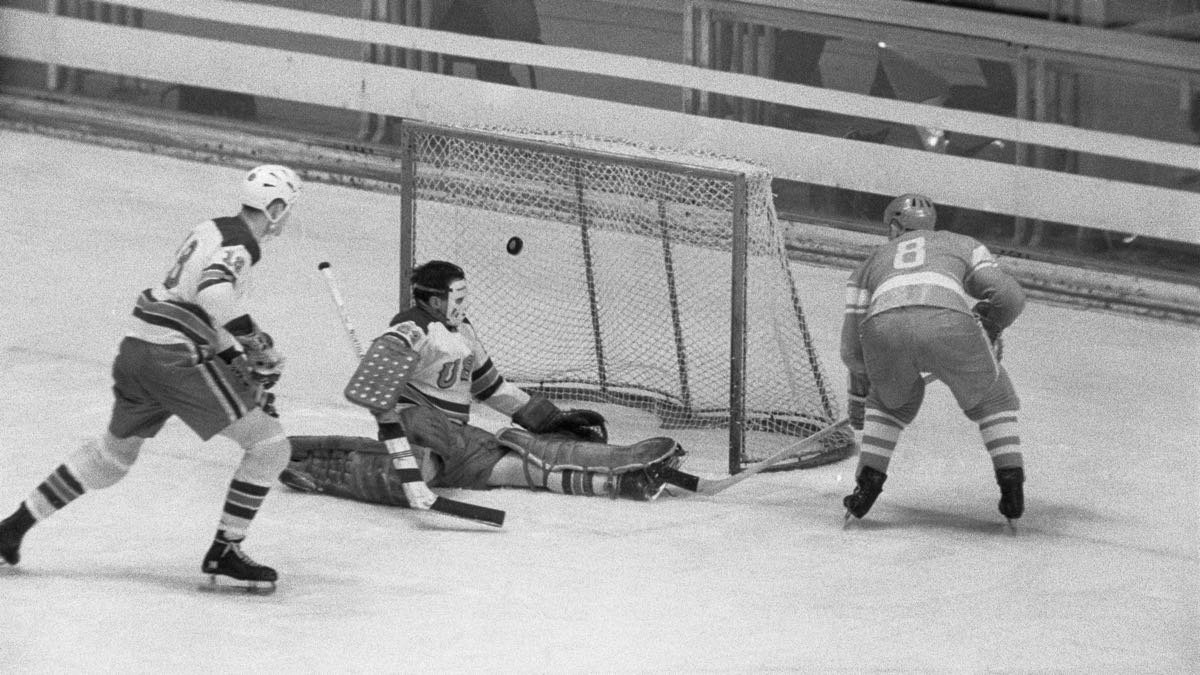
Those interruptions became the most famous games in the tournament's history, precisely because they were so unlikely. The American victory in 1980 at Lake Placid is the one everybody knows, and it draws its power entirely from the context: a team of college players beating a side that had been assembled and drilled for years.
For forty years the Olympic tournament was less a contest than a question - whether anybody could find a way to beat the Soviet Union on a given afternoon.
The professionals arrive
The amateur requirement was abandoned across the Olympic movement in stages, and hockey followed. European professionals appeared first, and from the 1998 Games in Nagano the NHL paused its season so that its players could attend. For four consecutive tournaments the Olympic competition was genuinely the best players in the world, which it had never previously been.
That arrangement has not been stable. The league's participation has been intermittent since, because stopping a professional season for two weeks is expensive and the clubs that pay the players are not the bodies that benefit from the tournament. The result is a competition whose quality depends on a commercial negotiation conducted every four years.
The women's tournament
Women's ice hockey joined the programme at Nagano in 1998, with the United States winning the first gold medal. The Canada-United States rivalry has dominated since, to the point where the final is close to a fixture, and the two teams have produced several of the best games in the entire Olympic hockey record.
The competitive depth behind them was thin for years and has improved considerably. European teams and Japan have become capable of beating opponents who used to be comfortable wins, which has made the group stage meaningful rather than a formality.
Because the 1920 tournament was part of the Summer Games, ice hockey is one of very few sports to have been contested at both a Summer and a Winter Olympics. Figure skating, which also appeared at Summer Games before 1924, is the other well-known case.
Why the Olympic tournament feels different
The format is responsible for a good deal of the drama. A short group stage followed by single-elimination games means that one bad afternoon ends a campaign, with no series to recover in. A professional playoff gives the better team several chances to prove it; the Olympic knockout gives it one.
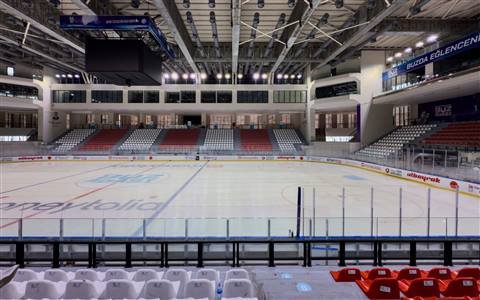
The rink has historically been a factor too. International hockey has often been played on a wider surface than the North American standard, which opens passing lanes and rewards skating over physical play. Teams accustomed to a narrow rink have frequently needed a game or two to adjust, and sometimes have not had a game or two to spare.
When the others broke through
The story is often told as Canada, then the Soviet Union, then the Americans in 1980, which leaves out the European nations that became genuine contenders in between. Sweden, Finland and Czechoslovakia all built programmes capable of beating anybody on a given day, and all of them eventually did.
The clearest demonstration came at Nagano in 1998, the first tournament with full NHL participation, which was won by the Czech Republic behind a remarkable goaltending performance from Dominik Hasek. It was the result that ended any remaining assumption that Olympic hockey was a contest between two or three countries.
What it is for
Olympic hockey occupies an odd position. It is not the sport's highest level of sustained competition - that is the professional season - and yet it produces the games people remember longest. A national team assembled for two weeks, playing elimination hockey in front of an audience that includes people who watch nothing else all year, generates a kind of attention the regular season cannot.
The tournament's history is largely a record of institutions arguing about eligibility while the games themselves quietly became the sport's most watched events. That tension has never been resolved, and the hockey has been consistently better than the arguments surrounding it.